








What's Happening?
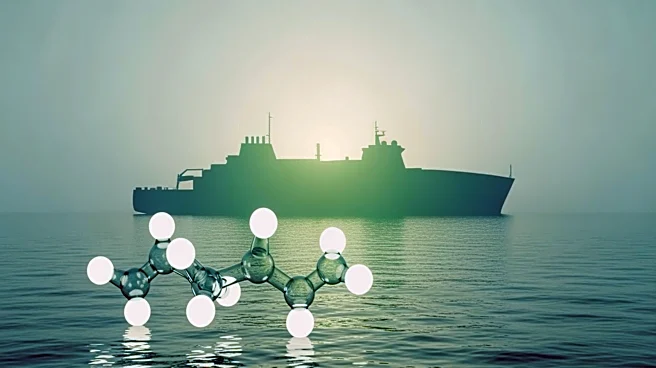
The International Maritime Organization (IMO) has approved new safety guidelines for ammonia-fueled vessels during its Maritime Safety Committee session. Developed in collaboration with Lloyd’s Register, the Belgian Federal Public Service Mobility and
Transport, and EXMAR, these guidelines aim to manage the safety risks associated with using ammonia as a marine fuel. The guidelines are based on operational experience and regulatory input, providing a framework for safely handling ammonia on board ships. This approval marks a significant step towards the commercial deployment of ammonia-fueled vessels, which are seen as a cleaner alternative to traditional marine fuels.
Why It's Important?
The approval of these guidelines is a crucial development in the maritime industry's efforts to reduce greenhouse gas emissions. Ammonia is considered a promising alternative fuel due to its potential to significantly lower emissions compared to conventional fuels. By providing a clear regulatory framework, the IMO is facilitating the adoption of ammonia as a marine fuel, which could lead to a more sustainable shipping industry. This move is likely to encourage shipowners and designers to consider ammonia as a viable option, potentially accelerating the transition to cleaner maritime operations.
What's Next?
With the guidelines in place, the maritime industry can expect to see increased interest and investment in ammonia-fueled vessels. Shipowners and designers will likely begin assessing the feasibility of incorporating ammonia into their operations. As the first ammonia-fueled vessels approach entry into service, the industry will closely monitor their performance and safety. The success of these early projects could pave the way for broader adoption of ammonia as a marine fuel, contributing to global efforts to combat climate change.