






What's Happening?
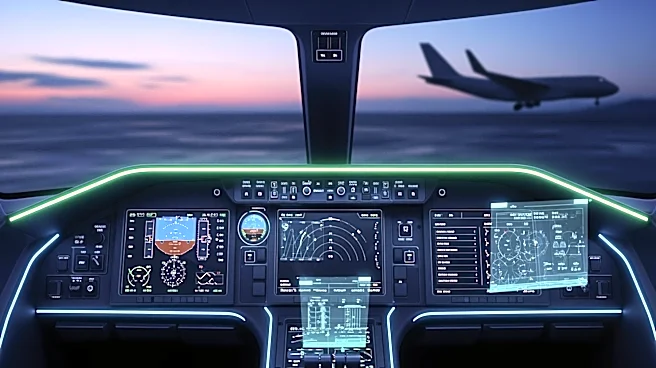
Merlin, a U.S. start-up based in Boston, is advancing its autonomous flight technology, specifically targeting large commercial and military aircraft. The company has been testing its 'Merlin Pilot for Commercial Cargo' system, which incorporates artificial
intelligence to manage all phases of flight, from take-off to touchdown. This technology aims to enhance aviation safety by reducing human-related errors and enabling augmented operations, such as allowing a single pilot to operate aircraft typically requiring two. Merlin's system is designed to be compatible with various aircraft types, including those from Airbus and Boeing, as well as military designs. A significant development is Merlin's work on integrating this technology into the Lockheed Martin C-130J, under a contract with the U.S. Special Operational Command. The company completed a preliminary design review for this specific application in March.
Why It's Important?
The development of autonomous flight technology by Merlin represents a significant shift in aviation, potentially transforming how aircraft are operated. By reducing reliance on human pilots, this technology could lead to increased safety and efficiency in both commercial and military aviation sectors. The ability to operate aircraft with fewer crew members could also result in cost savings for airlines and military operations. Furthermore, the integration of such technology into military aircraft like the Lockheed Martin C-130J highlights its strategic importance, potentially enhancing the operational capabilities of the U.S. military. This development aligns with broader trends in the aviation industry towards automation and could set a precedent for future advancements in autonomous flight systems.
What's Next?
Merlin's continued development and testing of its autonomous flight technology will likely focus on further integration into various aircraft types and expanding its capabilities. The successful implementation in the Lockheed Martin C-130J could lead to additional contracts and collaborations with other military and commercial aviation stakeholders. As the technology matures, regulatory bodies such as the Federal Aviation Administration (FAA) may need to establish new guidelines and standards for autonomous flight operations. The broader adoption of this technology could also prompt discussions on the future role of pilots and the potential need for retraining or reskilling within the aviation workforce.