



What's Happening?
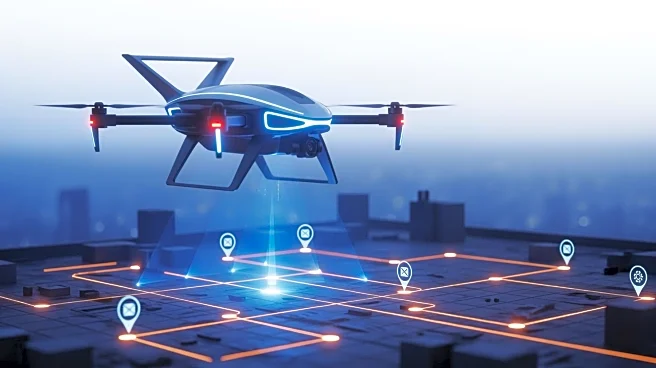
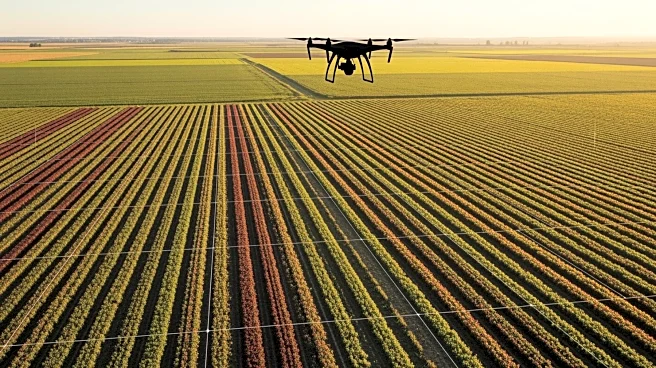
The commercial drone market is expected to grow significantly, reaching USD 17.7 billion by 2032, according to Stratview Research. This growth is driven by a compound annual growth rate (CAGR) of 11.6% from 2025 to 2032. The market, valued at USD 7.0 billion in 2024, is expanding due to the increasing deployment of drones in various sectors such as agriculture, surveillance, inspection, logistics, and mapping. The primary growth driver is the use of drones in precision agriculture and surveillance applications. As industries move towards automation and real-time data capture, drones are becoming integral to enterprise operations. The report highlights that rotary blade drones dominate the market due to their versatility, while surveillance and monitoring
are the leading application segments.
Why It's Important?
The expansion of the commercial drone market is significant for several U.S. industries, particularly agriculture and logistics. Drones enhance operational efficiency and data collection, which can lead to improved crop yields and optimized resource use in agriculture. In logistics, drones offer innovative solutions for last-mile delivery, potentially reducing costs and improving service speed. The growth of this market also reflects broader trends in industrial automation and the increasing importance of real-time data. Companies that invest in drone technology may gain competitive advantages in efficiency and innovation, while regulatory advancements could further facilitate market growth.
What's Next?
As the market grows, stakeholders can expect increased investment in drone technology and infrastructure. Companies may focus on developing more advanced drones with enhanced capabilities for specific applications. Regulatory bodies might also play a crucial role in shaping the market by establishing guidelines that ensure safe and efficient drone operations. The continued integration of drones into various sectors could lead to new business models and opportunities, particularly in logistics and agriculture.