






What's Happening?
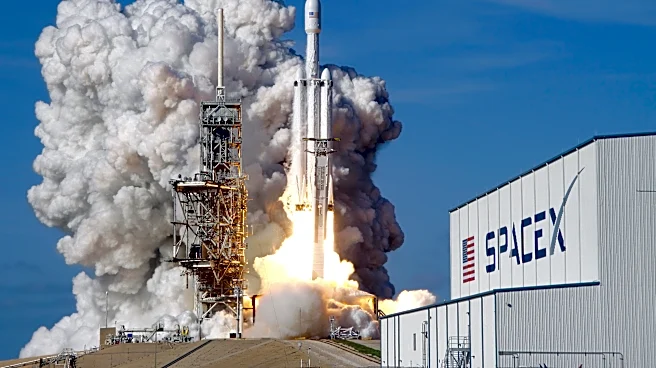
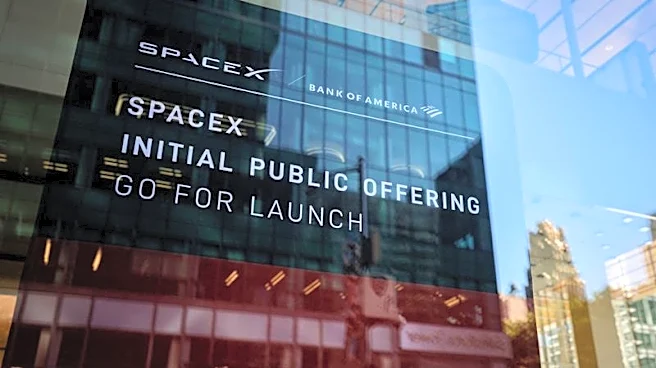
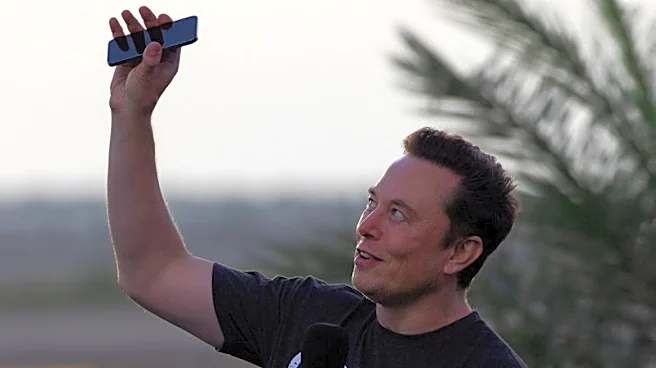
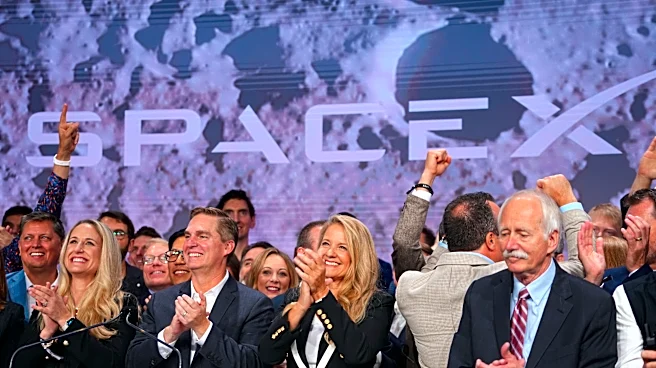
Elon Musk has become the world's first trillionaire following the successful initial public offering (IPO) of SpaceX. The company's shares surged by over 19% on their first day of trading, closing at just under $161 per share, which valued SpaceX at $2.1
trillion. This valuation makes SpaceX the sixth largest public company in the U.S., surpassing even Tesla, another of Musk's ventures. The IPO raised $75 billion, setting a new record previously held by Saudi Aramco. SpaceX plans to use the funds to advance its ambitious projects, including satellite deployment, orbital data centers, and the long-term goal of establishing a human colony on Mars. Despite the company's current financial losses, investors are optimistic about its future potential.
Why It's Important?
The IPO of SpaceX marks a significant milestone in the commercial space industry, highlighting the growing investor confidence in space exploration and technology. The funds raised will enable SpaceX to pursue its ambitious projects, potentially revolutionizing satellite communications and space travel. This development also underscores the increasing influence of private companies in space exploration, traditionally dominated by government agencies. The success of SpaceX's IPO could encourage more investments in space technology, fostering innovation and competition. However, the high valuation and Musk's control over the company raise concerns about governance and the sustainability of such high expectations.
What's Next?
SpaceX's future plans include expanding its satellite network and developing technologies for space colonization. The company will need to address technical challenges, such as radiation shielding for its orbital data centers and advancing its AI capabilities. Investors and analysts will closely monitor SpaceX's progress and financial performance, particularly its ability to achieve profitability. The IPO's success may also influence other tech giants like Anthropic and OpenAI, which are expected to go public soon. Additionally, regulatory scrutiny and shareholder concerns about Musk's control over the company could impact its future operations.