



What's Happening?
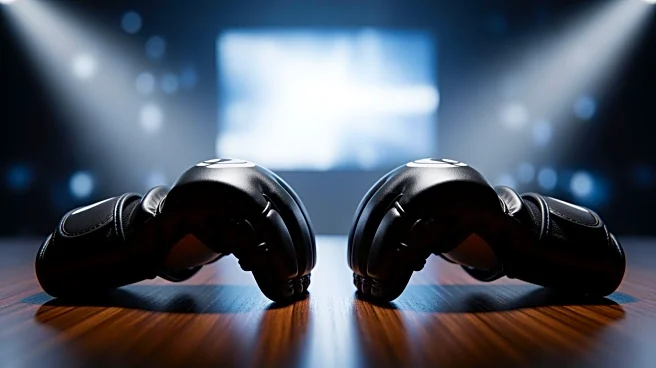
Netflix has announced a highly anticipated mixed martial arts (MMA) fight between Ronda Rousey and Gina Carano, scheduled for May 16 at the Intuit Dome in Los Angeles. This event marks Netflix's first foray into live MMA events, in collaboration with Most Valuable Promotions (MVP), an event company co-founded by Jake Paul. The fight will be conducted under the Unified Rules of MMA, featuring five rounds with four-ounce gloves. Rousey and Carano, both iconic figures in women's MMA, will compete as featherweights. This event comes five years after Carano's departure from Disney+ following controversial social media posts. Both fighters have expressed excitement about the match, highlighting its significance for the MMA community.
Why It's Important?
The Rousey-Carano
fight is significant as it represents Netflix's entry into live sports broadcasting, potentially setting a precedent for future events. This move could disrupt traditional sports broadcasting by leveraging Netflix's vast streaming platform to reach a global audience. For the MMA community, this fight brings together two pioneering figures in women's combat sports, offering fans a historic matchup. The collaboration with MVP also underscores a growing trend of crossover events in combat sports, which could attract new viewers and increase the sport's popularity. The event's success could influence how streaming services approach live sports in the future.
What's Next?
Following the announcement, anticipation is building for the fight, with fans and analysts speculating on the outcome and its impact on the fighters' careers. Netflix and MVP are likely to continue promoting the event heavily, potentially announcing additional fights on the card. The success of this event could lead to more live sports content on Netflix, expanding its offerings beyond traditional entertainment. Stakeholders in the sports and entertainment industries will be watching closely to assess the viability of streaming platforms as a venue for live sports, which could lead to increased competition with traditional broadcasters.