







What's Happening?
Chef Daniel Patterson has made a return to the fine-dining scene in Los Angeles with his new restaurant, Jacaranda. This venture marks his first foray back into high-end cuisine in a decade, following his departure from the acclaimed San Francisco restaurant Coi.
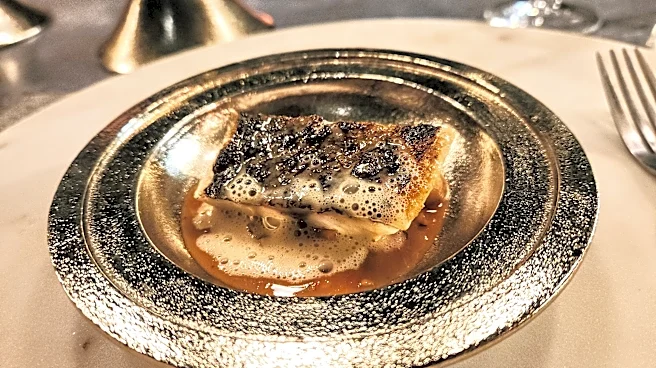
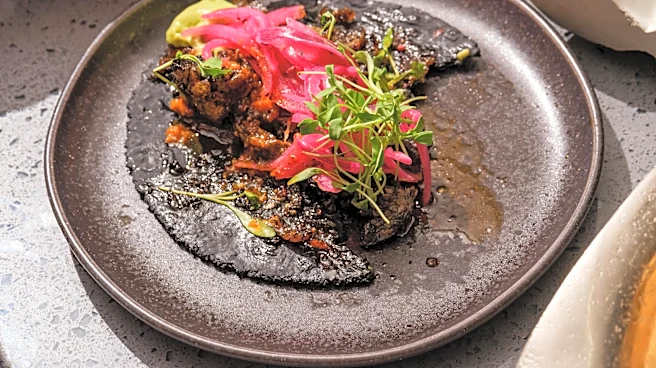
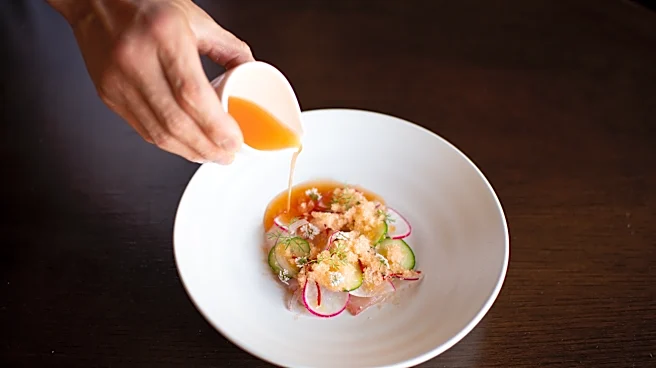
Jacaranda offers a more relaxed dining experience, blending formal tasting menus with a casual, social atmosphere. The restaurant features a single seating per night, allowing guests to enjoy a leisurely 10-course meal. Patterson's approach reflects a shift in fine dining, aiming to balance high-quality cuisine with a less formal environment. His wife, Sarah Lewitinn, plays a key role in creating the welcoming atmosphere, engaging with guests and adding a personal touch to the dining experience.
Why It's Important?
Patterson's return to fine dining with a casual twist highlights evolving trends in the culinary world. As consumer preferences shift towards more relaxed dining experiences, even high-end restaurants are adapting to meet these demands. This approach could influence other chefs and restaurateurs to rethink traditional fine-dining models, potentially leading to broader changes in the industry. Additionally, Patterson's focus on local ingredients and sustainable practices aligns with growing consumer interest in ethical and environmentally conscious dining. His efforts to create a supportive work environment for staff also address ongoing concerns about labor practices in the restaurant industry.
What's Next?
Jacaranda's success could pave the way for similar concepts in the fine-dining sector, encouraging more chefs to experiment with blending formal and casual elements. As the restaurant gains traction, it may inspire other culinary professionals to explore new ways of engaging with diners. Patterson's emphasis on local ingredients and sustainable practices could also contribute to a broader movement towards environmentally friendly dining. The restaurant's impact on the Los Angeles dining scene will be closely watched by industry observers, as it may signal a shift in consumer expectations and dining trends.