






What's Happening?
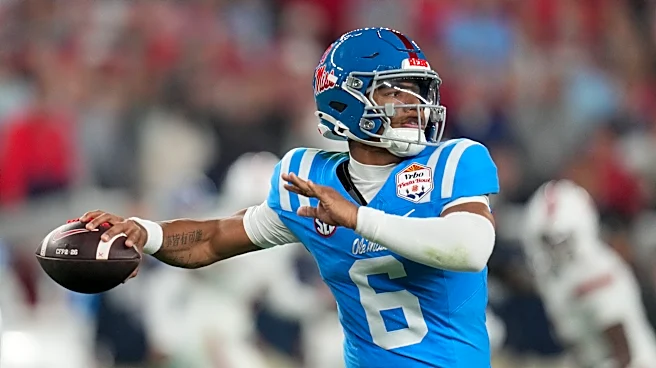
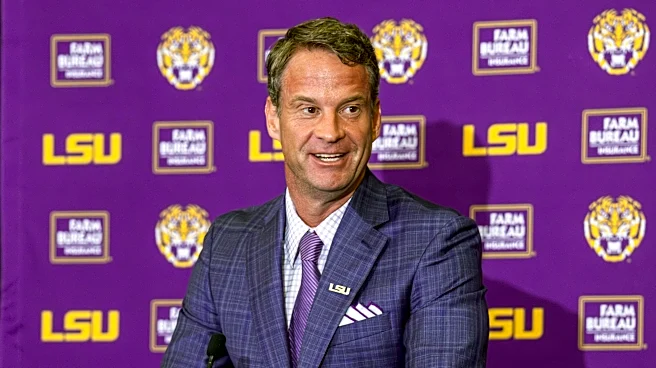
Lane Kiffin, known for his provocative remarks throughout his coaching career, has once again stirred controversy with comments made during an interview with Vanity Fair. Kiffin, who previously coached at Ole Miss, compared the challenges of recruiting
at the university to his current position at LSU, highlighting the racial history of Mississippi as a factor. His remarks suggested that some recruits' families were hesitant to move to Oxford, Mississippi, due to its perceived lack of diversity compared to Baton Rouge, Louisiana. These comments did not sit well with Ole Miss fans and alumni, including former defensive tackle Jerrell Powe. Powe publicly criticized Kiffin on social media, accusing him of exploiting black athletes to advance his career and then disparaging the state and university that helped him succeed. Kiffin later attempted to clarify his statements, asserting that they were factual observations rather than criticisms of Ole Miss.
Why It's Important?
The controversy surrounding Kiffin's comments highlights ongoing tensions related to race and history in college sports, particularly in the South. Ole Miss, like many institutions, has a complex history with race, and Kiffin's remarks have reignited discussions about diversity and inclusion in college athletics. This incident underscores the challenges universities face in balancing their historical legacies with modern expectations for diversity and equality. For Ole Miss, the backlash from Kiffin's comments could impact its reputation and recruiting efforts, as perceptions of racial inclusivity play a significant role in attracting talent. The situation also reflects broader societal issues, as sports often serve as a microcosm for larger cultural and racial dynamics in the U.S.
What's Next?
In the wake of Kiffin's comments, Ole Miss may need to engage in public relations efforts to address concerns raised by alumni and potential recruits. The university could emphasize its commitment to diversity and inclusion to mitigate any negative impact on its recruiting strategy. Additionally, Kiffin's remarks may prompt further discussions within the NCAA and among college sports programs about how to address and improve racial inclusivity. As the discourse continues, stakeholders in college athletics, including coaches, players, and administrators, may need to navigate these complex issues more carefully to avoid similar controversies.