





What's Happening?
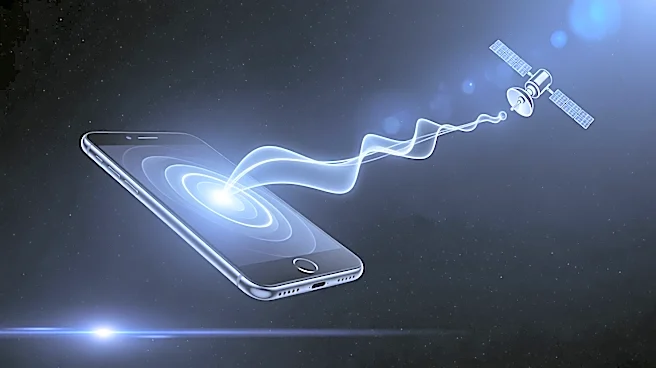
The number of direct-to-device (D2D) connections, primarily driven by Starlink, is increasing globally. However, only a small fraction of mobile users have connected their phones to satellites. D2D technology allows smartphones to connect to satellites,
providing limited connectivity in areas lacking terrestrial networks. Despite a 24.5% increase in global D2D connections from July 2025 to March 2026, usage in the U.S. and Canada has declined, possibly due to new charges by T-Mobile and Rogers. The U.S. leads in D2D activity, accounting for 45.9% of global usage. The technology is still in its early stages, with limited use cases, but improvements could enhance its role in wireless communication.
Why It's Important?
The rise of D2D connections represents a significant advancement in mobile connectivity, particularly for remote areas. This technology could reduce the need for additional cell towers, impacting the business models of cell tower operators. The limited current usage suggests a lack of awareness or necessity, as terrestrial networks cover most of the global population. However, as D2D technology evolves, it could offer more robust connectivity solutions, potentially altering the landscape of mobile communication and infrastructure investment.
What's Next?
As D2D technology develops, it may become a more integral part of mobile networks, especially in underserved regions. Companies like Starlink are likely to continue expanding their services, which could lead to increased adoption. The potential reduction in cell tower demand may prompt operators to explore new business strategies. Additionally, as awareness of D2D capabilities grows, more users may begin to utilize these services, driving further innovation and competition in the sector.