
What's Happening?
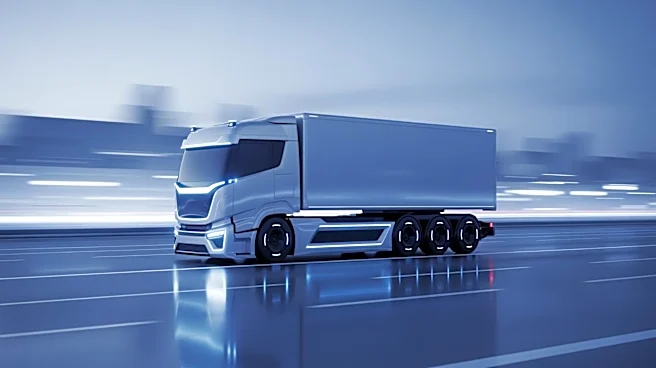
Volvo Group has announced an ambitious plan to generate approximately $3 billion in revenue from autonomous trucking operations by 2031. The company aims to begin driverless on-highway operations in the
U.S. by the first quarter of 2027. This initiative was detailed by Nils Jaeger, Head of Volvo Autonomous Solutions, during an investor meeting in Sweden. Volvo's strategy involves a hub-to-hub model where autonomous trucks handle long-haul highway segments, while human drivers manage the first and last miles. The autonomous trucks, developed in collaboration with Aurora Innovation, are already being tested on Texas highways and in Norwegian mining operations with safety drivers. The transition to fully driverless operations is expected to address labor shortages in the North American trucking market by increasing vehicle utilization beyond human driving limits.
Why It's Important?
Volvo's move into autonomous trucking represents a significant shift in the logistics and transportation industry, potentially transforming how goods are moved across the U.S. The ability to operate trucks autonomously could alleviate chronic labor shortages and increase efficiency by allowing trucks to operate continuously, beyond the legal driving hours for human drivers. This could lead to reduced transportation costs and increased supply chain reliability. The projected $3 billion revenue underscores the financial potential of autonomous trucking, positioning Volvo as a leader in this emerging market. The success of this initiative could influence other companies to accelerate their own autonomous vehicle programs, further advancing the technology and its adoption.
What's Next?
Volvo plans to scale its autonomous trucking operations, with over 300 vehicles expected to be on highways by the end of 2027. The company will continue to refine its technology and expand its operational footprint. As the industry moves from development to commercial execution, investors and stakeholders will closely monitor Volvo's progress. The company will also need to navigate regulatory challenges and public acceptance of driverless trucks. Additionally, Volvo's focus on electrification and sustainable fuels will play a crucial role in its long-term strategy, as it seeks to balance technological advancements with environmental considerations.