






What's Happening?
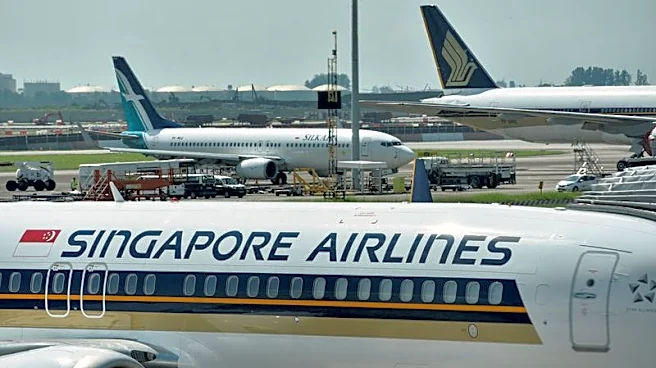
The International Air Transport Association (IATA) reports a 3.4% decline in global air passenger traffic in April, marking the first contraction since the post-Covid recovery. This drop is primarily attributed to a 46.6% decrease in demand for Middle
East carriers due to ongoing conflict in the region. The reduction in revenue passenger kilometers (RPKs) coincides with a 2.9% decrease in available seat kilometer (ASK) capacity. North America also experienced a slight decline in demand, while international demand fell by 5.3%. Despite these challenges, global air cargo demand increased by 4% during the same period.
Why It's Important?
The decline in airline demand highlights the significant impact of geopolitical conflicts on global travel and the aviation industry. The Middle East conflict has disrupted major air travel routes, affecting airlines' operational capacities and financial performance. This situation underscores the vulnerability of the airline industry to external shocks, such as geopolitical tensions and rising fuel costs. The reduction in passenger traffic could lead to financial strain for airlines, potentially resulting in cost-cutting measures or changes in service offerings. The increase in air cargo demand, however, suggests a shift in focus for some airlines towards freight services to offset passenger revenue losses.
What's Next?
Airlines may need to adjust their strategies to cope with the ongoing conflict and its impact on travel demand. This could involve re-routing flights, reducing capacity, or focusing more on cargo operations. The industry will also be closely monitoring fuel prices, as they have more than doubled, further affecting profitability. The coming months will test the resilience of airlines as they navigate these challenges and seek to maintain financial stability. Additionally, the situation may prompt discussions on improving crisis management and contingency planning within the aviation sector.