






What's Happening?
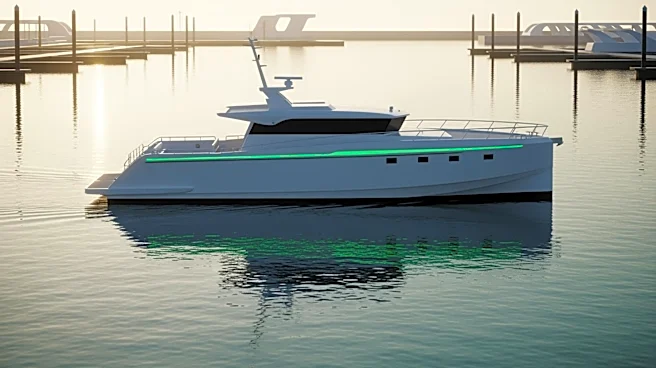
All American Marine (AAM), in collaboration with Harbor Breeze Cruises, has delivered a new 108-foot parallel hybrid passenger vessel named El Escudo. This state-of-the-art vessel, designed by Teknicraft Design, is set to operate in the ports of Los Angeles
and Long Beach, California. El Escudo is purpose-built for harbor tours, whale watching, and special event dining experiences, featuring a parallel hybrid propulsion system that allows for zero-emissions operation during low-speed harbor activities. The vessel meets stringent U.S. Environmental Protection Agency Tier 4 and California Air Resources Board (CARB) emissions standards, thanks to its advanced exhaust aftertreatment systems and optimized hull efficiency. The propulsion system includes twin 300kW electric traction motors and a 588kW BorgWarner Energy Storage System, enabling significant emissions reductions while maintaining operational flexibility.
Why It's Important?
The delivery of El Escudo marks a significant advancement in the maritime industry’s efforts to reduce emissions and promote sustainable practices. By integrating cutting-edge hybrid propulsion technology, the vessel sets a new standard for passenger vessels in terms of environmental impact. This development is crucial as it aligns with global efforts to combat climate change and reduce carbon footprints in various industries. The project, supported by CARB’s Advanced Technology Demonstration and Pilot Projects grant, demonstrates the potential for cleaner maritime operations and could influence future regulations and standards in the industry. Stakeholders in the maritime sector, including operators and environmental agencies, stand to benefit from the successful implementation of such technologies, which could lead to broader adoption and further innovation.
What's Next?
As El Escudo enters full service, it will serve as a model for future hybrid vessels, potentially influencing the design and construction of new passenger vessels across the U.S. and beyond. The success of this project may encourage other maritime operators to invest in similar technologies, further driving the industry towards sustainable practices. Additionally, the vessel’s performance and operational data will likely be monitored closely to assess its impact on emissions and operational efficiency, providing valuable insights for future projects. Regulatory bodies may also consider the outcomes of this initiative when developing new emissions standards and policies for the maritime industry.