






What's Happening?
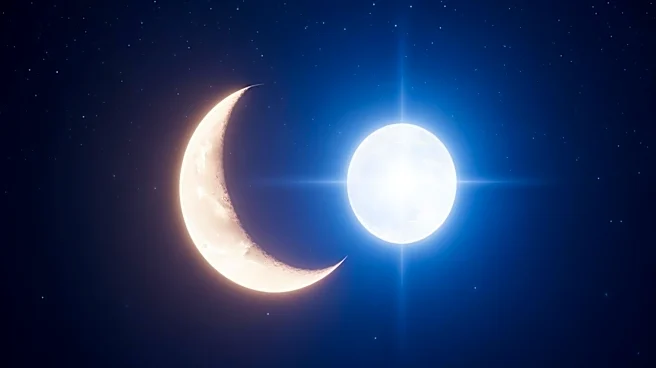
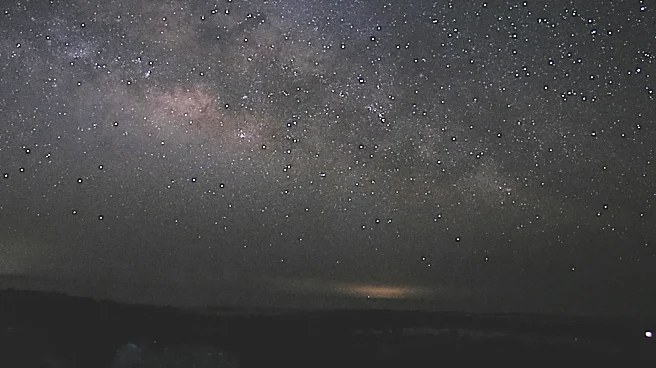
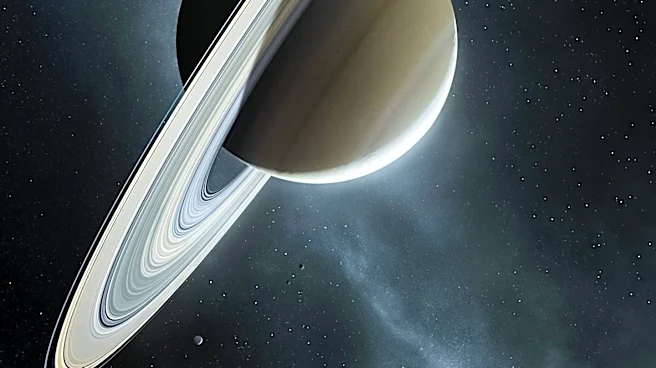
On May 20, 2026, the Moon is positioned in the constellation Cancer, near the Beehive Cluster (M44). This celestial event offers a viewing opportunity for stargazers using binoculars or telescopes. Saturn is visible in the predawn sky, with its rings
and moon Titan observable through telescopes. Mars is also becoming more visible as it rises earlier each day. The Moon, Jupiter, and Venus align along the ecliptic, creating a striking visual in the night sky.
Why It's Important?
This alignment provides an excellent opportunity for amateur astronomers and the general public to engage with astronomy. Observing such celestial events can enhance public interest in space and science, potentially inspiring educational activities and community events. The visibility of Saturn and Mars offers a chance to observe planetary features, fostering a deeper appreciation for the solar system's complexity.
What's Next?
As the Moon continues its orbit, it will move away from the Beehive Cluster, altering the night sky's appearance. Stargazers will have additional opportunities to observe other celestial events, such as the alignment of planets and the visibility of deep-sky objects. Astronomy enthusiasts may plan future observations based on these changing celestial dynamics.