
What's Happening?
The concept of AI-powered workforce orchestration is transforming how work is organized in U.S. enterprises. Traditionally, jobs have been the primary structure for organizing work, a system that functioned
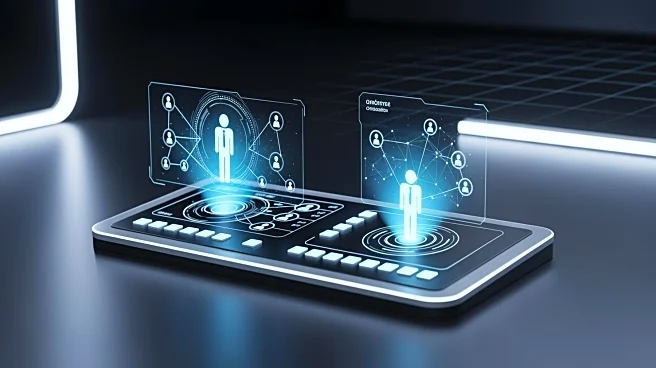
well in an industrial economy. However, in today's digital economy, characterized by constant change and rapid shifts, this model is becoming obsolete. AI-powered workforce orchestration addresses this by aligning real capabilities with dynamic work demands, rather than static job roles. This approach allows for predictive planning, visible mobility, and continuous hiring, fundamentally changing the organizing logic from jobs to work itself. A significant aspect of this transition is the emergence of the agentic AI workforce, which collaborates with human teams to enhance the volume, speed, and complexity of work that organizations can manage.
Why It's Important?
The shift to AI-powered workforce orchestration is crucial for U.S. businesses as it addresses several structural failures in the current job-based system. These include rigid job frameworks, disconnected skills and performance metrics, and slow talent supply responses to business demands. By adopting this new model, organizations can reduce economic drag and increase operational efficiency. The agentic AI workforce not only complements human efforts but also expands the capacity for organizations to handle more complex tasks. This evolution allows companies to operate at a higher strategic level, making workforce decisions a source of momentum rather than friction. As a result, businesses that embrace this change can better adapt to the fast-paced demands of the modern economy.
What's Next?
As more U.S. enterprises integrate AI-powered workforce orchestration into their operations, the workforce is expected to expand without a corresponding increase in headcount. This will enable work to accelerate without causing chaos, making opportunities more visible and workforce decisions more strategic. Organizations that move quickly to adopt this model will not only adapt to the future of work but will also play a role in shaping it. The dismantling of traditional job structures in favor of work-centric models will likely lead to a more agile and responsive business environment, where human judgment and AI capabilities are seamlessly integrated.