



What's Happening?
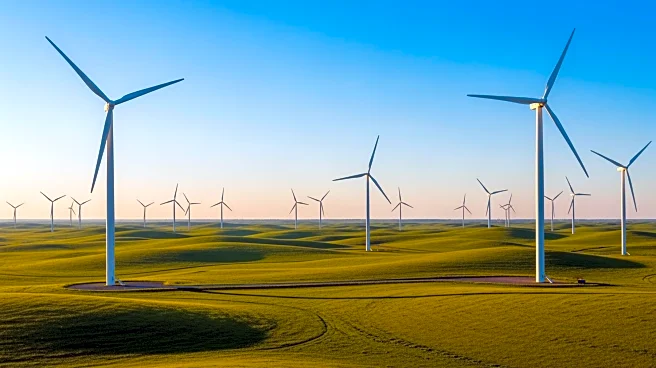
South Dakota regulators have approved a permit for a $750 million wind farm project, which will be the largest in the state. The project, led by Philip Wind Partners, a subsidiary of Invenergy, is set to be constructed on approximately 110 square miles of private land north of Philip, about 85 miles east of Rapid City. The wind farm will feature up to 87 turbines and 5.5 miles of electrical transmission line, with a capacity of 333 megawatts, enough to power hundreds of thousands of homes. The project is expected to create around 200 construction jobs and 12 long-term positions. Over the next 30 years, it is projected to generate $85 million in payments to landowners, $50 million in property taxes, and $10 million in other state and local sales
taxes. The South Dakota Public Utilities Commission has accepted a settlement agreement outlining the requirements for the project's construction and operation. Construction is expected to begin in June, with commercial operations anticipated by December 2027.
Why It's Important?
The approval of this wind farm is significant as it reinforces South Dakota's position as a leader in wind energy production. Currently, the state ranks ninth nationally, with wind accounting for 58% of its electrical generation, a higher percentage than all other states except Iowa and Kansas. This project will further enhance the state's renewable energy capacity, contributing to energy independence and sustainability. The economic impact is also notable, with substantial financial benefits for local landowners and government through taxes and payments. The creation of jobs during construction and operation will provide a boost to the local economy. Additionally, the project aligns with broader national and global efforts to transition to renewable energy sources, reducing reliance on fossil fuels and mitigating climate change impacts.
What's Next?
With the permit approved, the next steps involve the commencement of construction in June. The project will need to adhere to the requirements set forth in the settlement agreement with the Public Utilities Commission. As the project progresses, stakeholders, including local communities and environmental groups, may monitor its impact on the environment and local economy. The successful implementation of this project could set a precedent for future renewable energy projects in the region, potentially influencing policy and investment in similar initiatives.