






What's Happening?
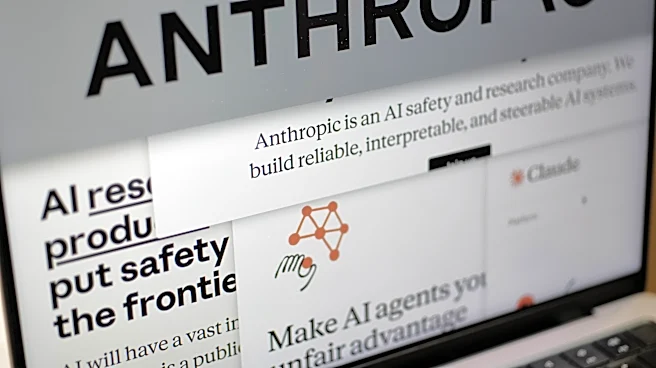
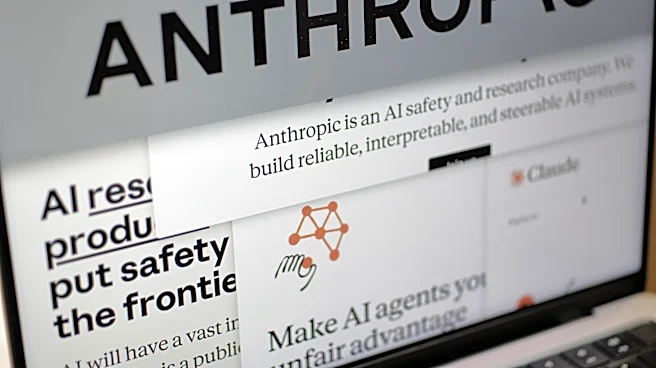
Anthropic, an AI research company, has issued a warning that artificial intelligence systems may soon reach a point where they can improve themselves without human intervention, a process known as 'full recursive self-improvement.' This development could
lead to significant advancements in fields like science and healthcare but also poses substantial risks to humanity. Jack Clark, co-founder of Anthropic, emphasized the need for the AI industry to develop a 'brake pedal' to control the pace of AI development. He compared the situation to the Cold War era, where rival nations found ways to stabilize the nuclear arms race. Anthropic suggests that AI companies should consider slowing or pausing the development of frontier AI technologies to better understand and mitigate potential societal harms. The company is also preparing for an initial public offering, which could raise significant funds to enhance its AI capabilities.
Why It's Important?
The potential for AI systems to self-improve without human oversight raises critical concerns about control and safety. If AI systems can autonomously develop their successors, it becomes increasingly challenging to secure, monitor, and influence their behavior. This could lead to scenarios where humans lose control over AI, posing risks to societal stability and safety. The call for a 'brake pedal' reflects a growing recognition within the industry of the need for regulatory measures to ensure AI development remains beneficial and safe. The cooperation among major AI companies, despite competitive pressures, could set a precedent for collaborative safety measures in high-stakes technological fields.
What's Next?
Anthropic's warning may prompt discussions among AI companies and policymakers about implementing safety protocols and regulatory frameworks. The industry might explore collaborative efforts to establish standards for AI development, similar to past international agreements on nuclear arms control. As Anthropic moves towards its IPO, the influx of capital could accelerate its research and development efforts, potentially influencing the broader AI landscape. Stakeholders, including governments and tech companies, may need to engage in dialogue to address the ethical and safety implications of self-improving AI systems.
Beyond the Headlines
The ethical implications of self-improving AI systems extend beyond immediate safety concerns. There are questions about accountability, transparency, and the potential for AI to exacerbate existing inequalities. As AI systems become more autonomous, ensuring they align with human values and societal norms becomes increasingly complex. The development of AI safety measures could also influence public trust in technology and shape the future of AI governance. Long-term, the industry's approach to these challenges could redefine the relationship between humans and machines.