
What's Happening?
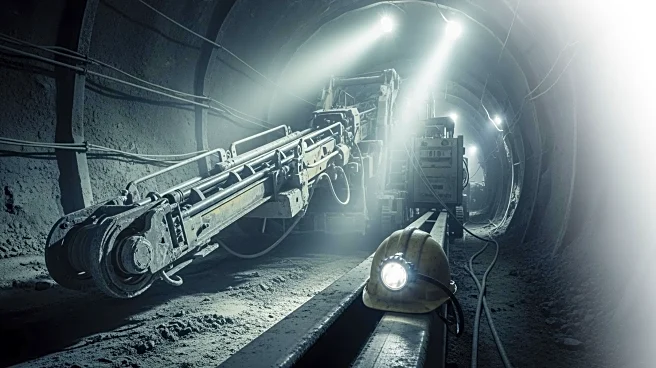
Australian Droid + Robot (ADR) has partnered with Intel Corp to deploy autonomous inspection robots equipped with edge AI technology in underground mining operations. These robots, integrated with Intel Xeon and Intel Core Ultra processors, are designed to process large volumes of data from 3D lidar, thermal cameras, and gas sensors in real-time. The collaboration aims to improve safety by allowing robots to enter hazardous environments first, assessing conditions such as toxic gas levels and structural stability before human entry. This initiative addresses the challenges of operating in deep underground settings where traditional Wi-Fi and cloud connections are unreliable.
Why It's Important?
The partnership between ADR and Intel is significant as it enhances
safety protocols in the mining industry, potentially reducing the risk to human workers. By utilizing advanced AI and computing technology, these robots can perform critical inspections and data analysis, ensuring environments are safe for human entry. This not only protects lives but also minimizes downtime and increases operational efficiency. The ability to operate in extreme conditions without human intervention could revolutionize mining practices, setting a precedent for other industries facing similar challenges.
What's Next?
The successful deployment of these robots in mining operations could lead to broader applications in other sectors such as search and rescue or heavy infrastructure. As ADR continues to refine its technology, there is potential for expansion into new markets, leveraging the robustness of their systems developed for mining. Future collaborations may focus on enhancing the robots' capabilities, increasing their autonomy, and integrating more advanced analytics to further improve safety and efficiency.
Beyond the Headlines
The use of edge AI in mining not only addresses immediate safety concerns but also raises questions about the future of labor in such industries. As robots become more capable of performing tasks traditionally done by humans, there may be shifts in workforce dynamics, requiring new skills and training for workers. Additionally, the ethical implications of relying on machines for safety assessments could lead to discussions on accountability and trust in AI systems.