







What's Happening?
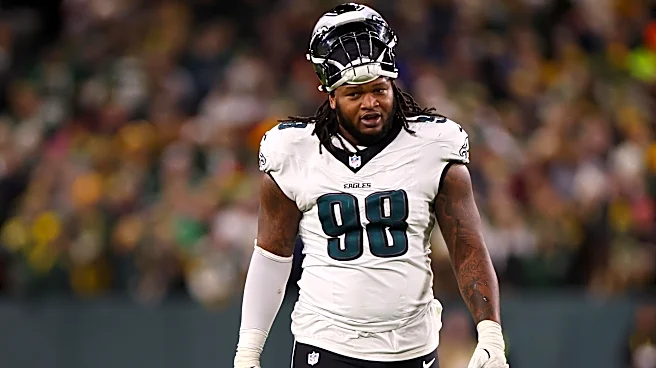
The Kansas City Chiefs are implementing a new defensive strategy focused on enhancing their interior rush capabilities. This shift comes as the team aims to emulate successful tactics used by other top NFL teams, such as the Philadelphia Eagles and Seattle
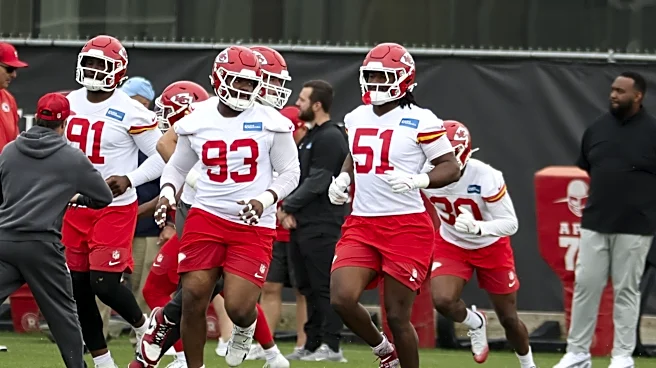
Seahawks, who have excelled in applying pressure from the interior. The Chiefs have made significant offseason moves, including signing former Patriots nose tackle Khyiris Tonga and drafting Clemson defensive tackle Peter Woods. These additions are intended to support star player Chris Jones, who has been a dominant force but requires additional support to maintain the team's competitive edge. The Chiefs' defensive coordinator, Steve Spagnuolo, is drawing on his experience from his time with the New York Giants, where a strong interior rush was pivotal in their success.
Why It's Important?
The Chiefs' decision to bolster their interior defensive line is crucial in maintaining their status as a top contender in the NFL. By enhancing their ability to pressure opposing quarterbacks from the interior, the Chiefs aim to disrupt offensive plays more effectively. This strategy aligns with a broader league trend where successful teams are investing in versatile and powerful interior rushers. The move is expected to improve the Chiefs' defensive performance, potentially leading to better outcomes in critical games. For the Chiefs, this could mean a stronger defense capable of supporting their high-powered offense, thereby increasing their chances of securing victories in the postseason.
What's Next?
As the Chiefs integrate their new defensive players, the focus will be on developing chemistry and effectiveness during the upcoming training camps and preseason games. The performance of Khyiris Tonga and Peter Woods will be closely monitored to assess their impact on the team's defensive capabilities. The Chiefs will also evaluate their overall defensive strategy to ensure it aligns with their goal of becoming a more formidable opponent. Success in these areas could lead to further strategic adjustments and potentially influence other teams to adopt similar approaches.