





What's Happening?
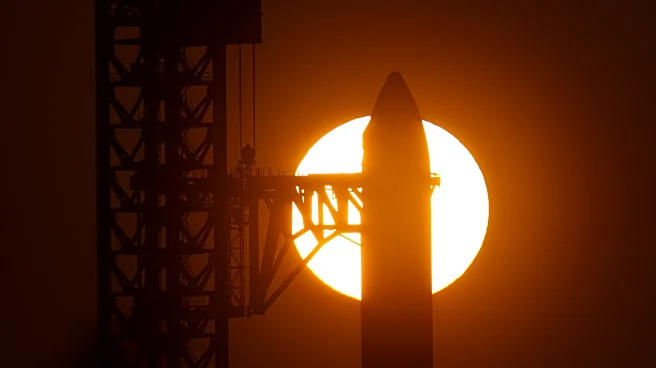
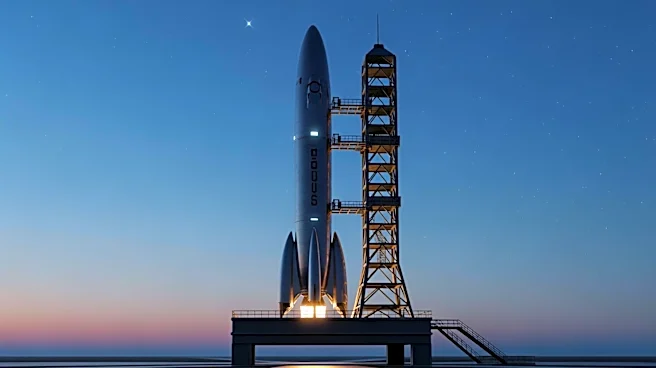
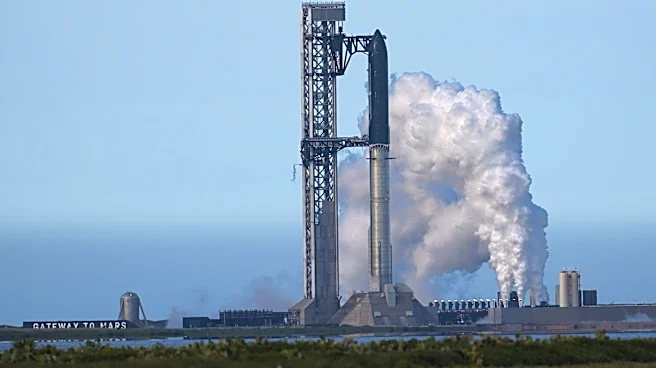
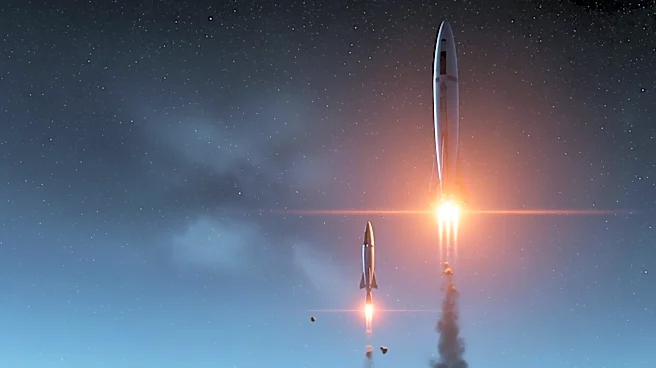
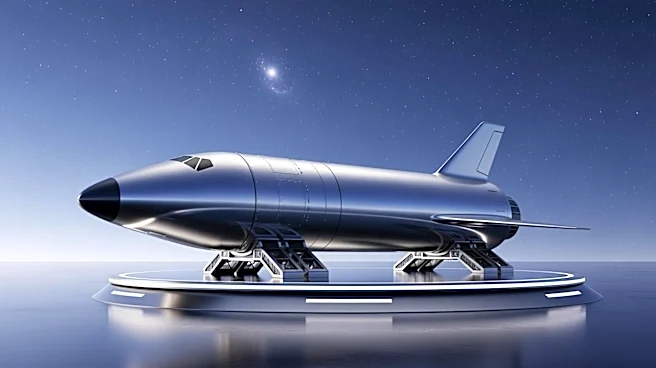
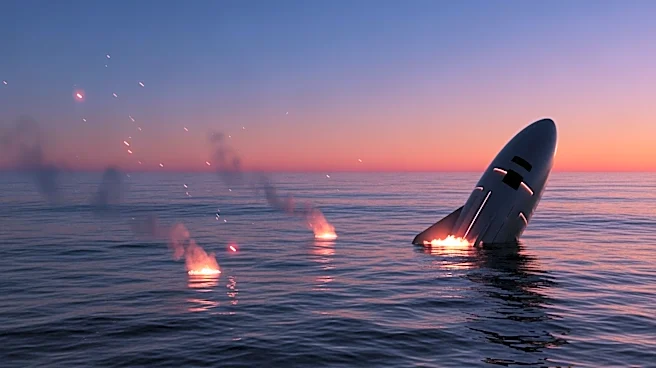
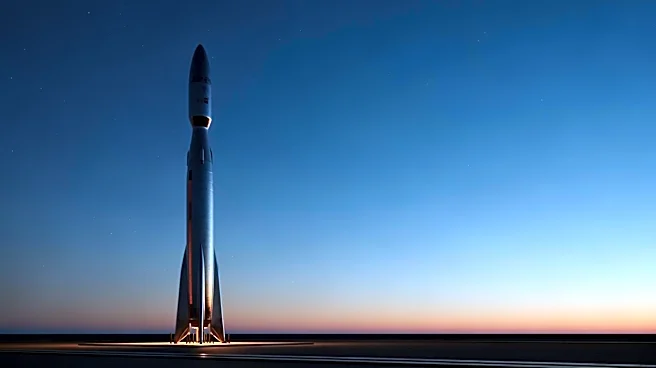
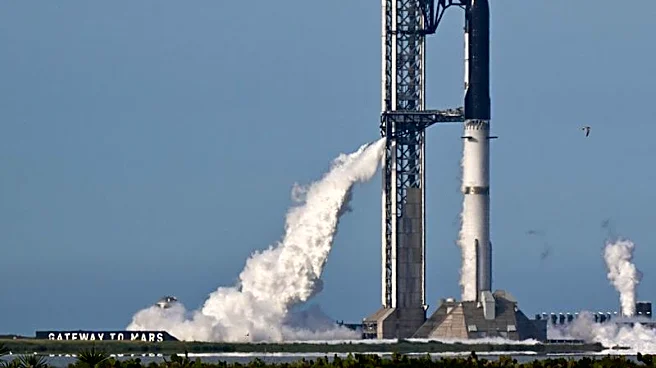
SpaceX successfully launched its Starship V3, the largest and most powerful rocket in history, from Starbase, Texas. The test flight, which lasted about an hour, ended with the Starship splashing down in the Indian Ocean and exploding as planned. The launch was
initially delayed due to a malfunctioning hydraulic pin in the launch tower. Despite achieving most of its major objectives, both stages of the rocket experienced engine failures. The Super Heavy booster failed to reignite its engines for a targeted landing and crashed into the water. This launch marked a significant milestone for SpaceX as it tested the upgraded Starship V3 hardware and a new launchpad.
Why It's Important?
The successful launch and subsequent planned explosion of the Starship V3 represent a critical step forward in SpaceX's mission to develop a fully reusable spacecraft capable of carrying humans to Mars and beyond. The test provided valuable data on the performance of the new Raptor engines and the structural integrity of the spacecraft. This development is crucial for the future of space exploration and commercial space travel, potentially reducing costs and increasing the frequency of space missions. The success of such tests could position SpaceX as a leader in the next generation of space travel, impacting industries related to aerospace, technology, and international space policy.