
What's Happening?
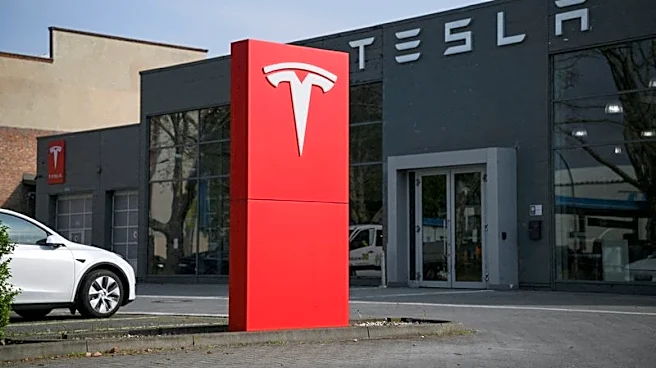
Tesla has integrated xAI's Grok chatbot into its vehicles, allowing drivers to use voice commands for navigation and to ask questions on various topics. Mike Nelson, a Tesla Model Y owner, has been using
Grok for several months and finds it both useful and potentially dangerous. The chatbot, still in beta, is part of a broader trend among automakers like Volvo, Rivian, Mercedes, and BMW, who are incorporating AI assistants into their vehicles. These AI systems aim to provide hands-free access to information, potentially reducing the need for drivers to use phones or screens while driving. However, experts like Philip Koopman from Carnegie Mellon warn that these chatbots could become new sources of distraction, as their impact on driver attention is not yet fully understood.
Why It's Important?
The integration of AI chatbots like Grok into vehicles represents a significant shift in how drivers interact with their cars. While these systems offer convenience and could enhance the driving experience by providing easy access to information, they also pose safety risks. The potential for distraction is a major concern, as drivers may become too engaged with the chatbot, diverting attention from the road. This development highlights the need for careful consideration of how AI is implemented in vehicles to ensure it enhances safety rather than compromising it. The automotive industry must balance innovation with responsibility, as the consequences of increased in-car distractions could be severe.
What's Next?
As more automakers adopt AI chatbots, there will likely be increased scrutiny from regulators and safety advocates. The industry may need to establish guidelines or standards to ensure these systems are safe for use while driving. Additionally, further research into the impact of AI chatbots on driver attention and safety will be crucial. Automakers might also explore ways to integrate these systems more seamlessly, minimizing potential distractions. The evolution of AI in vehicles will require ongoing dialogue between technology developers, automakers, and regulatory bodies to address safety concerns effectively.