






What's Happening?
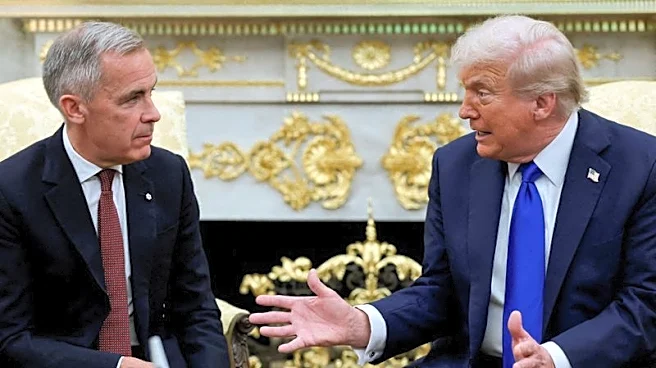
Chinese-made electric vehicles (EVs) are entering the Canadian market under a new trade agreement that allows up to 49,000 Chinese EVs to be imported annually at a reduced tariff rate. This development follows a deal between Canadian Prime Minister Mark
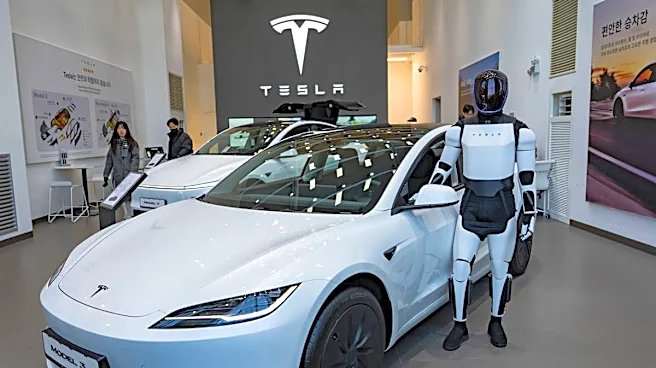
Carney and China's President Xi Jinping. The agreement marks a significant shift from Canada's previous high-tariff policy on Chinese EVs. The influx of Chinese EVs, including models from Tesla's Shanghai factory, is expected to challenge the dominance of U.S. automakers in Canada.
Why It's Important?
The entry of Chinese EVs into Canada represents a potential disruption to the North American automotive market, where U.S. manufacturers have traditionally held a strong position. This development could lead to increased competition and pressure on U.S. automakers to innovate and adapt to changing market dynamics. The agreement also highlights the growing influence of Chinese automakers in the global EV market, which could have long-term implications for the industry. Additionally, the deal may strain U.S.-Canada trade relations, as U.S. policymakers express concerns over the impact on domestic manufacturers.
What's Next?
The Canadian government's decision to allow Chinese EVs may lead to further trade negotiations and adjustments in North American automotive policies. U.S. automakers and policymakers may seek to address the competitive challenges posed by Chinese EVs through strategic partnerships, innovation, and potential trade measures. The situation could also influence future trade agreements and policies between Canada, the U.S., and China, as stakeholders navigate the evolving automotive landscape.