







What's Happening?
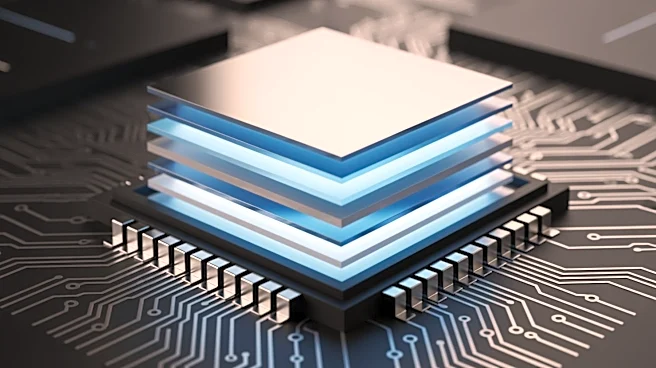
AMD is set to introduce its 3D V-Cache technology to its commercial workstation processors for the first time, as part of a refreshed line of Ryzen PRO 9000 series chips. Previously, this technology was primarily used in gaming CPUs, but it has shown
significant improvements in creative tasks as well. The new processors, built on AMD's Zen 5 architecture, will feature between 6 to 16 cores and 12 to 32 threads, with support for up to 256GB of EEC DDR5 memory and PCIe 5.0. AMD highlights that the 3D V-Cache will be particularly beneficial for complex, data-intensive workloads such as simulation, rendering, and real-time visualization. The rollout of these new chips is expected to begin in the second half of 2026, with the Lenovo ThinkStation P4 anticipated to launch in Q3 2026.
Why It's Important?
The introduction of 3D V-Cache technology into AMD's workstation processors marks a significant advancement in the capabilities of CPUs used for professional and creative applications. This move is likely to enhance AMD's competitiveness in the semiconductor industry, particularly in sectors requiring high-performance computing for tasks like simulation and rendering. By expanding the application of its gaming technology to workstations, AMD is positioning itself as a versatile player capable of meeting diverse computing needs. This could lead to increased adoption of AMD processors in professional environments, potentially impacting market dynamics and challenging competitors who dominate the workstation segment.
What's Next?
As AMD rolls out these new processors, the market will likely see increased competition among CPU manufacturers, particularly in the workstation segment. Companies that rely on high-performance computing for creative and data-intensive tasks may consider upgrading to AMD's new offerings, potentially leading to shifts in market share. Additionally, the success of these processors could influence future developments in CPU technology, encouraging further innovation in cache and memory architectures. Stakeholders, including businesses and tech enthusiasts, will be watching closely to see how these processors perform in real-world applications and whether they deliver on AMD's promises of enhanced performance.