





What's Happening?
Suncor Energy, a major player in the Canadian oil sands industry, has announced a strategic shift in its production methods, aiming to produce the majority of its bitumen using steam-assisted extraction technology by 2040. This move marks a significant
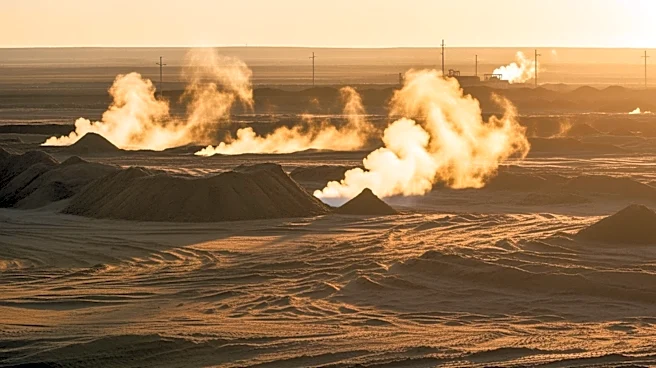
change from its current operations, where 70% of its oil sands crude is extracted through large-scale mining operations in northern Alberta. The transition to in situ methods, which involve using steam to extract oil from deeper deposits, is expected to result in lower costs and higher cash flow. Suncor's CEO, Rich Kruger, highlighted that in situ production delivers twice the cash flow per barrel compared to mining. The company plans to increase its in situ production capacity, particularly at its Firebag site, and has filed for regulatory approval to expand its capacity significantly.
Why It's Important?
This strategic shift by Suncor Energy is significant for the oil industry, particularly in Canada, as it reflects a broader trend towards more cost-effective and potentially environmentally friendly extraction methods. In situ technology is less disruptive to the surface environment compared to traditional mining, which could lead to reduced environmental impact. For Suncor, this transition is crucial for maintaining profitability and securing a long-term supply of bitumen as its Base Plant mine approaches depletion. The move could also influence regulatory decisions and investment strategies within the oil sands sector, as companies seek to balance economic viability with environmental considerations.
What's Next?
Suncor plans to gradually increase its in situ production, with significant ramp-ups expected after 2032. The company is also exploring the development of new in situ projects, such as the Lewis development, which will be phased in to align with the depletion of its Base Plant mine. Regulatory approvals will be a critical factor in these developments, as Suncor seeks to expand its production capacity. The company's recent reserve estimates indicate a substantial increase in bitumen reserves, which could support its long-term production goals. Stakeholders will be closely monitoring these developments, as they could set precedents for future oil sands projects.