

What's Happening?
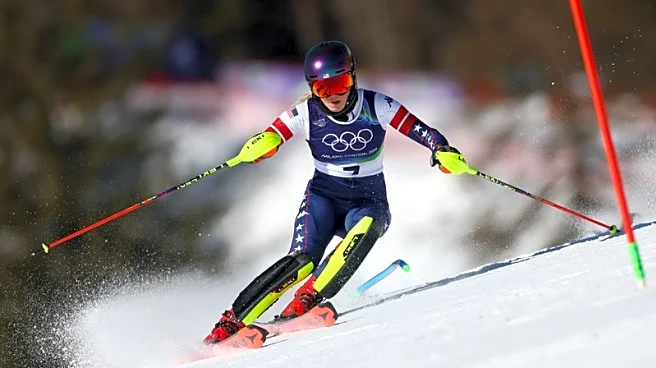
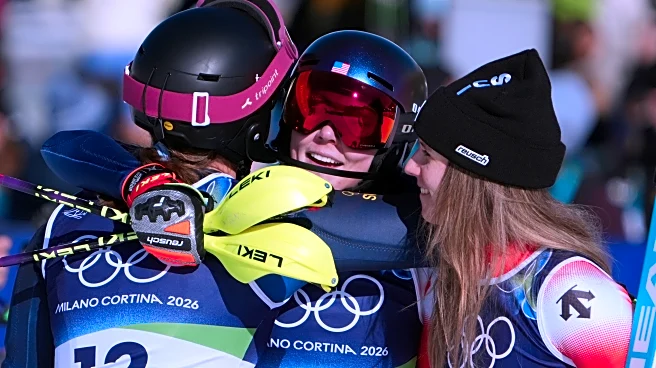
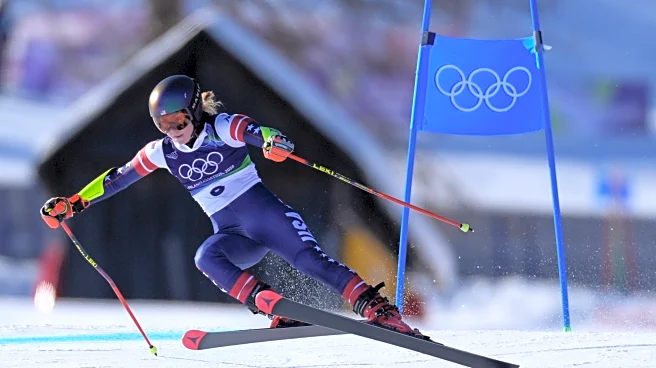
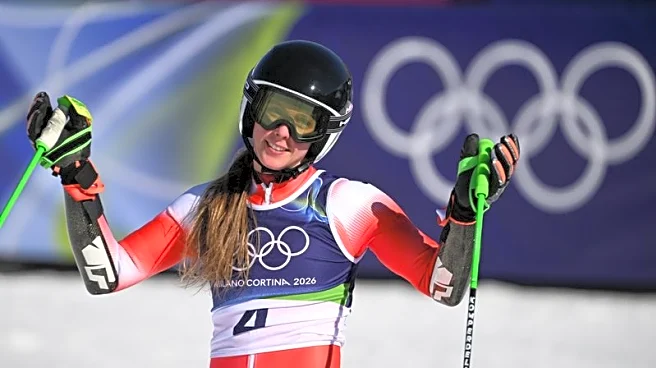
Mikaela Shiffrin concluded her participation in the 2026 Winter Olympics with a remarkable victory in the women's slalom event, ending a medal drought that had persisted since 2018. Shiffrin's final run was completed in 1:39.10, outpacing silver medalist Camille Rast by 1.5 seconds and bronze medalist Anna Swenn-Larsson. This victory marks Shiffrin's fourth Olympic medal and her first since 2018, following a series of eight events where she failed to reach the podium. Her performance in the slalom, her strongest event, was exceptional, as she led the opening round with a time of 47.13 seconds, nearly a second faster than her closest competitor. Shiffrin's triumph is particularly significant given her previous struggles, including a crash in the slalom final at the 2022
Beijing Olympics.
Why It's Important?
Shiffrin's victory is a significant moment in her career, symbolizing a return to form after a challenging period. Her success not only adds to her legacy as one of the greatest alpine skiers but also serves as an inspiration to athletes facing similar challenges. The win is a testament to her resilience and ability to perform under pressure, which could influence her future performances and endorsements. For the U.S. Olympic team, Shiffrin's gold contributes to the country's overall medal tally, enhancing its standing in the international sports community. Her achievement may also boost interest and participation in winter sports among young athletes in the U.S.
What's Next?
Following her victory, Shiffrin is likely to focus on upcoming World Cup events, where she can further solidify her status in alpine skiing. Her performance at the Olympics may lead to increased media attention and sponsorship opportunities. Additionally, Shiffrin's success could prompt discussions about her potential participation in future Olympic Games, as well as her role in mentoring the next generation of skiers. The U.S. Ski Team may also leverage her victory to promote the sport and attract new talent.