






What's Happening?
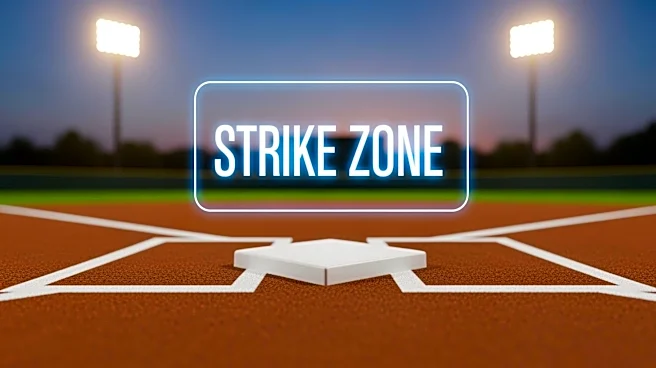
The Southeastern Conference (SEC) has received approval from the NCAA Baseball Rules Committee to implement an automated ball-strike (ABS) challenge system for its upcoming conference baseball tournament. This system, similar to the one used in Major
League Baseball, allows teams to challenge umpire calls on balls and strikes. Each team will start with three challenges per game, retaining them if successful. The pitch location will be verified against an electronic strike zone, with results displayed on the stadium videoboard and broadcast. The SEC tournament, scheduled for May 19-24 in Hoover, Alabama, will be the first to use this technology, reflecting the conference's commitment to innovation and aligning more closely with professional baseball standards.
Why It's Important?
The introduction of the ABS system in the SEC tournament marks a significant step towards modernizing college baseball. By aligning with professional standards, the SEC aims to enhance the accuracy of umpire decisions, potentially reducing human error and increasing fairness in the game. This move could influence other conferences to adopt similar technologies, potentially leading to widespread changes in how college baseball is officiated. The system also supports the development of student-athletes by preparing them for professional-level play, where such technologies are increasingly common. This innovation could set a precedent for other sports to explore technological integrations to improve game integrity.
What's Next?
Following the SEC's implementation of the ABS system, other conferences may consider adopting similar technologies for their tournaments. The success and reception of the system during the SEC tournament will likely influence its broader adoption. Stakeholders, including coaches, players, and fans, will be closely watching the outcomes and effectiveness of the system. If successful, the NCAA might consider expanding the use of ABS to regular season games or other sports, further integrating technology into college athletics. The SEC's decision could also prompt discussions on the balance between traditional officiating and technological assistance in sports.