



What's Happening?
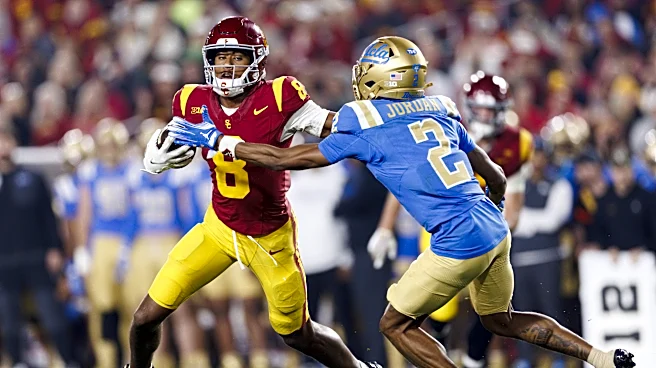
The Baltimore Ravens recently drafted Ja'Kobi Lane, a wide receiver from USC, as their third-round pick in the 2026 NFL Draft. Lane, known for his impressive physical attributes, including a 10.5-inch hand span and an 80.75-inch wingspan, has sparked
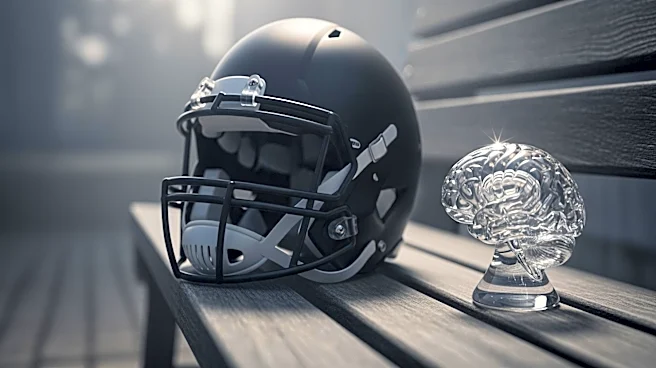
controversy with a recent claim about Chronic Traumatic Encephalopathy (CTE). During a livestream, when asked by a fan if he feared developing CTE, Lane responded, 'I have CTE.' This statement has raised eyebrows, as CTE is a serious condition linked to repeated head injuries, commonly associated with contact sports like football. While Lane's comment may have been made in jest, it highlights ongoing concerns about player safety and the long-term health risks associated with football.
Why It's Important?
The issue of CTE in football is a significant concern for players, teams, and the NFL as a whole. Lane's comment, whether serious or not, underscores the ongoing dialogue about the risks of head injuries in the sport. CTE has been linked to numerous health issues, including memory loss, depression, and dementia, and has been diagnosed posthumously in several former NFL players. The Ravens, like other teams, must balance the excitement of new talent with the responsibility of ensuring player safety. Lane's statement could prompt further discussions within the league about protocols for player health and safety, potentially influencing future policies and practices.
What's Next?
The Ravens and the NFL may need to address Lane's comment, whether through public statements or internal discussions. This incident could lead to increased scrutiny on how teams educate and protect players from head injuries. Additionally, Lane's performance and health will be closely monitored as he begins his professional career. The league might also consider revisiting its concussion protocols and player safety measures to prevent long-term health issues among players.
Beyond the Headlines
Lane's comment brings to light the cultural and ethical dimensions of football, where the thrill of the game often overshadows the potential health risks. It raises questions about the responsibility of teams and the league in safeguarding players' futures. The incident could also influence public perception of the sport, potentially affecting youth participation rates and parental attitudes towards football.