







What's Happening?
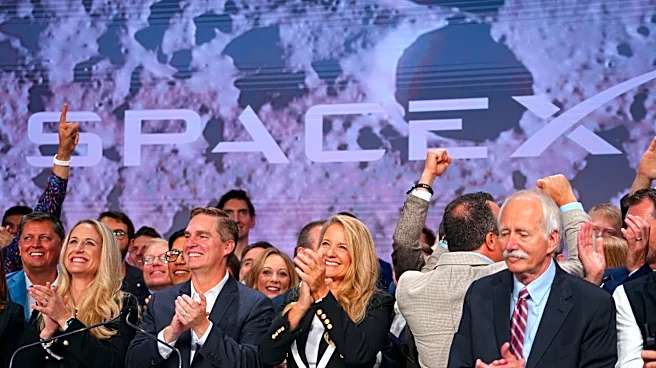
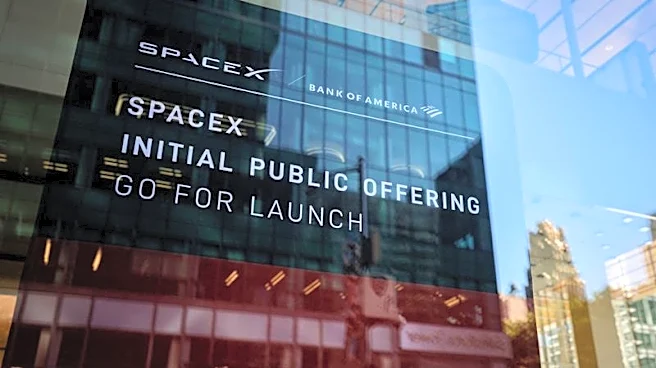
SpaceX, led by Elon Musk, made a historic debut on the stock market with its initial public offering (IPO) on NASDAQ under the ticker SPCX. The IPO was priced at $135 per share, but high demand pushed the opening price to $150, eventually closing at $160.95.
This represents a 19.2% increase from the initial price, giving SpaceX a market capitalization of $2.1 trillion, making it the seventh-largest publicly traded company globally. The IPO was notable for its accessibility to retail investors, with over 20% of shares made available to them, a significant increase compared to the typical 5-10% allocation. SpaceX's business operations, including its dominant rocket business and the profitable Starlink satellite internet service, have attracted significant investor interest. The company projects a total addressable market of $28.5 trillion, with a substantial portion attributed to AI infrastructure and applications.
Why It's Important?
The successful IPO of SpaceX marks a significant milestone in the financial markets, highlighting the growing investor interest in space and technology sectors. The company's valuation and market debut underscore the potential of space exploration and satellite internet services as lucrative investment opportunities. SpaceX's ability to attract substantial retail investor participation could influence future IPO strategies, encouraging more companies to offer greater access to individual investors. The company's focus on AI and its integration across Musk's ventures, including Tesla, positions SpaceX as a key player in the burgeoning AI market. This development could have far-reaching implications for the technology industry, potentially driving innovation and competition in AI and space technologies.
What's Next?
Following its IPO, SpaceX will be closely monitored by investors and analysts as it navigates the public market. The company's performance in the coming weeks will be indicative of investor confidence and market stability. SpaceX's strategic focus on expanding its AI capabilities and satellite services will likely drive its growth trajectory. The company's ability to maintain its competitive edge in the space industry and capitalize on its projected market opportunities will be critical to sustaining its high valuation. Additionally, the inclusion of SpaceX stock in various index funds and retirement accounts could further influence its market dynamics.