
What's Happening?
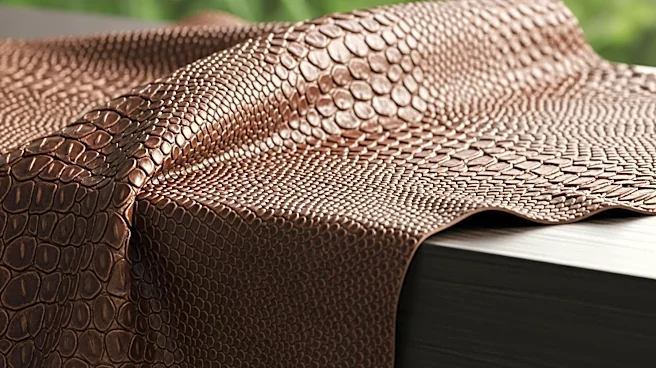
A luxury handbag made from Tyrannosaurus rex protein has been unveiled, showcasing a novel approach to material creation through biofabrication and automation. Developed by VML, The Organoid Company, and Lab-Grown
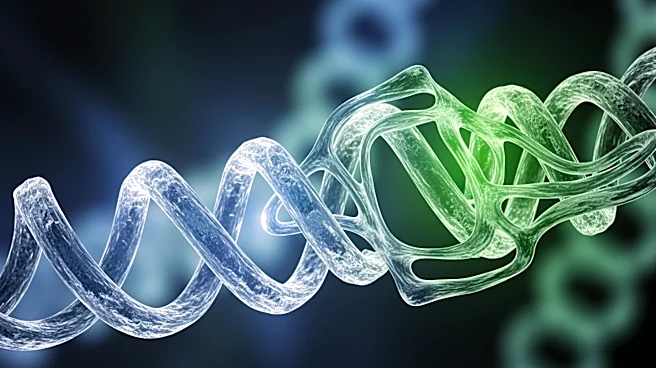
Leather, the handbag uses fossil-derived protein fragments and computational biology to reconstruct a collagen blueprint. This blueprint is expressed in engineered cells to grow a leather-like material. The project, displayed at the Art Zoo Museum in Amsterdam, highlights the potential of genome and protein engineering to create new biomaterials. Despite skepticism from some paleontologists about the authenticity of 'T-rex leather,' the technical achievement is significant, demonstrating the convergence of biology, computation, and manufacturing.
Why It's Important?
This development represents a shift in materials science towards programmable matter, where materials are designed at the molecular level rather than extracted from natural sources. The implications are vast, potentially reducing reliance on livestock and resource-intensive agriculture, lowering environmental impact, and enabling new classes of high-performance materials. The project serves as a proof of concept for programmable materials, with luxury goods often acting as early testbeds for new technologies. If scalable, these processes could revolutionize industries by creating materials that are both innovative and ethically sound, moving beyond traditional manufacturing to a more sustainable and technologically advanced approach.
What's Next?
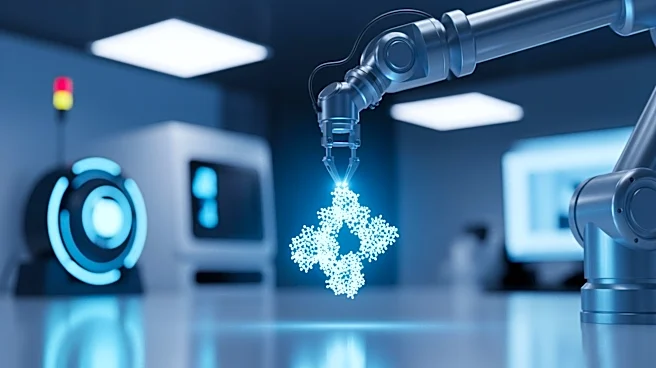
The future of this technology lies in its scalability and application beyond luxury goods. Companies like Modern Meadow and Bolt Threads are already exploring similar bioengineered materials, such as collagen-based textiles and spider silk. The success of these ventures could lead to widespread adoption in various industries, from fashion to construction, where biofabrication could replace traditional materials with more sustainable alternatives. The integration of AI and automation in these processes will be crucial, as they allow for precise control and optimization of production environments, potentially transforming the industrial landscape into one where materials are engineered and cultivated rather than manufactured.
Beyond the Headlines
The ethical and environmental implications of biofabrication are profound. By reducing the need for animal-derived materials, this technology could significantly decrease the environmental footprint of industries reliant on livestock. Additionally, the ability to design materials with specific properties opens up possibilities for creating entirely new substances tailored for specific uses, potentially leading to innovations in fields such as medicine, where materials with unique properties could be developed for implants or prosthetics. This shift towards a more sustainable and technologically integrated approach to material production could redefine the relationship between industry and the environment.