
What's Happening?
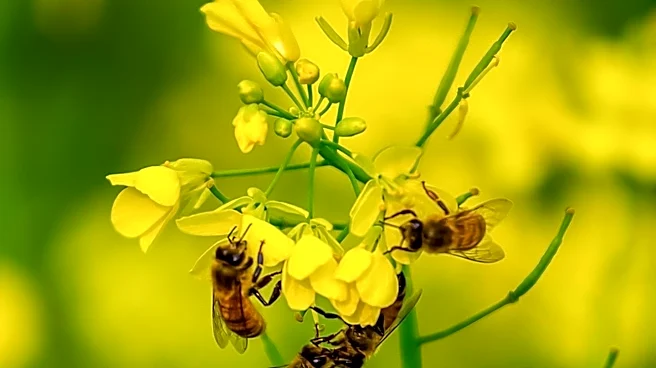
Research highlights the significant role of pollinators, such as bees and hoverflies, in supporting human health and economic stability. In rural Nepal, pollinators contribute to over 20% of people's intake
of key vitamins and more than 40% of their income. The decline of pollinators due to climate change and habitat loss poses a threat to these communities. However, simple interventions like planting wildflowers and reducing pesticide use can help reverse these declines and improve health and economic outcomes.
Why It's Important?
The study underscores the critical importance of biodiversity in maintaining human health and economic well-being. Pollinators play a vital role in food production and nutrition, particularly in rural communities that rely heavily on agriculture. The decline of pollinators could lead to significant health and economic challenges, highlighting the need for conservation efforts to protect these essential species. The findings emphasize the interconnectedness of ecological health and human prosperity.
What's Next?
Efforts to preserve pollinators will likely focus on implementing conservation strategies that support biodiversity, such as creating habitats and reducing harmful agricultural practices. Policymakers and environmental organizations may increase their advocacy for biodiversity conservation as a public health investment. The study's findings could also influence agricultural policies and practices to prioritize sustainable and environmentally friendly approaches.