







What's Happening?
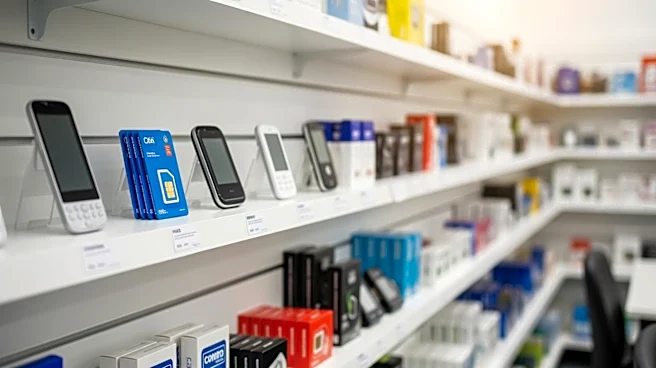
Walmart has emerged as the most significant physical retail destination for wireless shopping in the United States, surpassing traditional carriers like T-Mobile, AT&T, and Verizon in terms of foot traffic. According to data from the Recon Analytics US
Consumer Device Purchase Journey report, Walmart accounted for 17.4% of wireless store visits in Q2 2025, outpacing T-Mobile's 16.1%. This shift is largely due to Walmart's appeal to lower-income consumers, with over half of its wireless visitors earning under $50,000 annually. The retailer's significant share of prepaid customers, including those using Straight Talk and Tracfone, highlights its role as a critical player in the wireless market. Despite this, no single carrier controls Walmart's wireless departments, which are often managed by third-party firms.
Why It's Important?
Walmart's dominance in the wireless retail space presents both opportunities and challenges for U.S. carriers. The retailer's ability to attract a large number of prepaid customers offers carriers a potential pool of consumers to convert to postpaid plans. However, the lack of direct control over Walmart's wireless operations means carriers must navigate a complex retail environment to capitalize on this opportunity. Additionally, the data suggests that traditional credit-score-based approaches may need to be adjusted to effectively target Walmart's customer base. The findings also underscore the importance of word-of-mouth recommendations in consumer decision-making, with friends and family being the top research sources for wireless purchases.
What's Next?
Carriers may need to develop new strategies to engage Walmart's customer base, potentially by offering promotions tailored to lower-income consumers. This could involve modifying credit requirements or providing incentives like free devices with trade-ins. Additionally, carriers might explore partnerships with third-party firms managing Walmart's wireless departments to gain more influence over in-store promotions. As the wireless market continues to evolve, carriers will need to adapt to the changing retail landscape and leverage Walmart's significant foot traffic to drive growth.
Beyond the Headlines
The rise of AI as a research tool among consumers adds another layer of complexity to the wireless market. The data indicates that AI usage for device research is growing, particularly among value-segment buyers. This trend suggests that brands lacking structured, AI-indexed product data may lose out during the early stages of consumer research. As such, carriers and manufacturers may need to invest in AI-driven marketing strategies to remain competitive. Additionally, the findings highlight the importance of maintaining high customer satisfaction scores, as these are crucial for generating positive word-of-mouth recommendations.