





What's Happening?
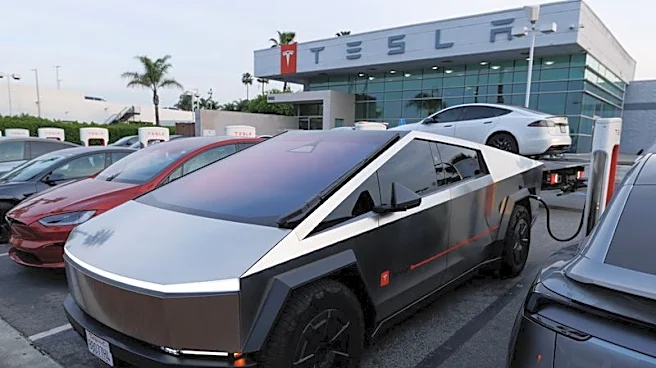
Tesla's stock fell by 4% following the release of its first-quarter 2026 earnings report, which, despite exceeding expectations in terms of earnings and revenue, highlighted a significant increase in capital expenditures. The company reported a 67% year-over-year
rise in capital expenditures, reaching $2.493 billion, primarily due to investments in AI compute and autonomous vehicle development. This surge in spending has raised concerns among investors focused on Tesla's near-term free cash flow. Additionally, Tesla's CEO, Elon Musk, acknowledged that many vehicles equipped with older hardware lack the necessary components for full autonomy, despite customers having paid for this capability. This has led to apprehensions about potential costly redress options for the company.
Why It's Important?
The increase in Tesla's capital expenditures and the tempered outlook on its self-driving technology have significant implications for the company's financial health and investor confidence. The substantial investment in AI and autonomous driving infrastructure suggests a strategic focus on future growth, but it also raises concerns about immediate financial returns and cash flow. Investors are particularly wary of the potential negative impact on free cash flow, which could affect Tesla's stock performance and market valuation. Furthermore, the acknowledgment of hardware limitations in existing vehicles could lead to customer dissatisfaction and potential financial liabilities, impacting Tesla's reputation and future sales.
What's Next?
Tesla may need to address the concerns raised by investors regarding its capital expenditure strategy and the limitations of its self-driving technology. The company might consider providing more detailed plans on how it intends to achieve full autonomy in its vehicles and manage customer expectations. Additionally, Tesla could face pressure to offer solutions or compensation to customers affected by the hardware limitations. The company's future financial performance will likely be closely monitored by investors, particularly in terms of its ability to balance long-term growth investments with short-term financial stability.