






What's Happening?
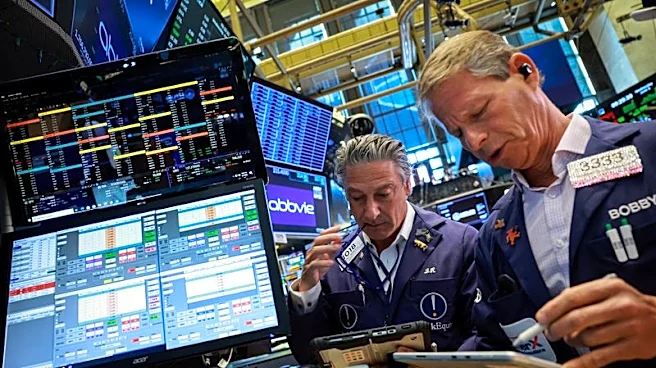
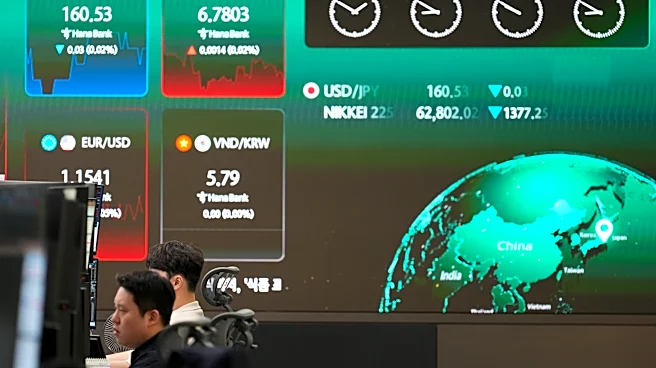
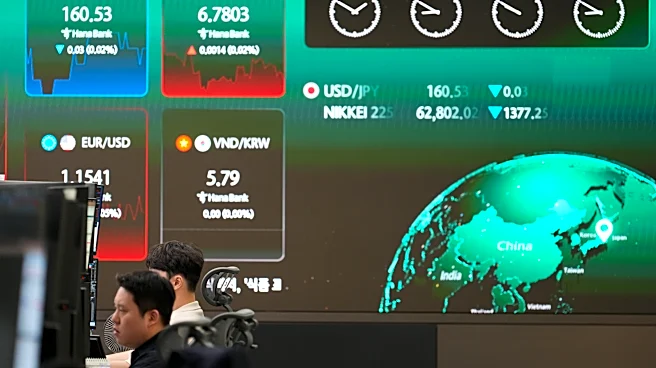
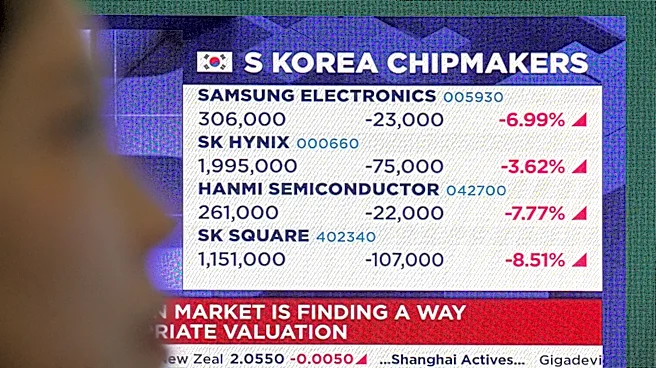
U.S. stock index futures experienced a decline as technology stocks continued to face losses, compounded by renewed tensions between the U.S. and Iran. The Dow E-minis fell by 379 points, or 0.74%, while the S&P 500 E-minis and Nasdaq 100 E-minis also
saw significant drops. This downturn is attributed to high valuations in the tech sector and concerns over potential Federal Reserve interest rate hikes to curb inflation. The U.S. military's recent strikes on Iranian targets, following President Trump's vow to retaliate against the downing of a U.S. Apache helicopter, have further escalated tensions, impacting market sentiment. Additionally, the upcoming consumer price data report is anticipated to provide insights into inflation trends, especially in light of rising energy costs due to the Iran conflict.
Why It's Important?
The decline in stock futures highlights the volatility in the market driven by geopolitical tensions and economic uncertainties. The tech sector, which has been a significant driver of market growth, is under pressure due to high valuations and concerns over the monetization of AI. The potential for increased Federal Reserve interest rates to manage inflation could further impact investor confidence. The situation between the U.S. and Iran adds a layer of geopolitical risk that could affect global markets and energy prices. Investors are closely monitoring these developments as they could influence future market trends and economic policies.
What's Next?
Investors are awaiting the release of the May consumer price data, which could influence the Federal Reserve's decision on interest rates. A higher-than-expected inflation reading may prompt the Fed to consider rate hikes, affecting borrowing costs and investment strategies. The ongoing U.S.-Iran tensions could lead to further geopolitical instability, impacting global oil prices and market dynamics. Additionally, the much-anticipated SpaceX IPO could add pressure to the tech sector, as concerns about excessive optimism in tech valuations persist.