





What's Happening?
The United States possesses a vast hydrocarbon endowment, with significant resource potential awaiting conversion into proved reserves. The Bureau of Ocean Energy Management's 2026 assessment estimates 65.8 billion barrels of undiscovered oil and 218
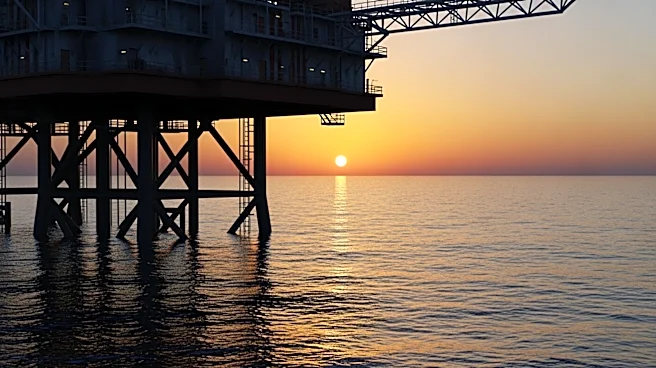
trillion cubic feet of natural gas in the U.S. Outer Continental Shelf. Recent policy changes have restored royalty rates and mandated lease sales, potentially increasing the conversion of resources into reserves. The Gulf of America remains a key area for exploration, with geological potential for large-scale discoveries.
Why It's Important?
The U.S. oil industry's ability to convert resource potential into reserves is crucial for maintaining energy independence and economic stability. Policy changes that facilitate exploration and development can enhance the country's production capabilities, impacting global oil markets and trade dynamics. The focus on conventional offshore reservoirs and advanced drilling technologies highlights the industry's shift towards more complex geological structures, which require significant investment and expertise. These developments could lead to increased domestic production and reduced reliance on foreign oil.