





What's Happening?
Tommy Lloyd, the head coach of Arizona men's basketball, has agreed to a five-year contract extension with the program. This agreement positions him as one of the top five highest-paid coaches in college basketball, with an average salary of $7.5 million
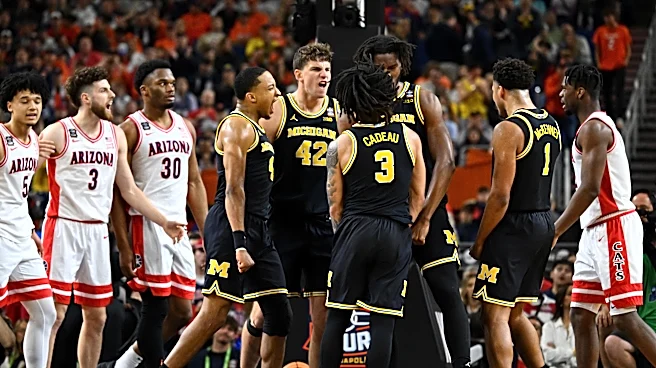
per season. The extension comes amid rumors that North Carolina might have been interested in Lloyd following the firing of their coach, Hubert Davis. Arizona's athletic director, Desireé Reed-Francois, expressed strong confidence in Lloyd's leadership, citing the program's recent successes, including a 36-2 record this season and a berth in the Final Four. Lloyd has been instrumental in maintaining Arizona's status as a premier basketball program, achieving significant victories and developing student-athletes who contribute positively to the community.
Why It's Important?
This contract extension is significant as it solidifies Arizona's commitment to maintaining its competitive edge in college basketball. By securing Lloyd, Arizona ensures continuity in leadership and strategy, which is crucial for sustaining their recent successes. The decision also reflects the high stakes and competitive nature of college basketball coaching, where top programs vie for the best talent to lead their teams. For Arizona, retaining Lloyd means stability and the potential for continued success in national tournaments, which can enhance the university's reputation and attract top recruits. Conversely, North Carolina's interest in Lloyd highlights the challenges faced by programs in transition, as they seek to rebuild and compete at the highest levels.
What's Next?
With the contract extension in place, Lloyd will focus on leading Arizona through the remainder of the season, aiming for a national championship. The program will likely continue to build on its current momentum, leveraging Lloyd's leadership to attract top-tier recruits and maintain its competitive standing. Meanwhile, North Carolina will need to continue its search for a new head coach, a decision that will be critical for the program's future direction and success. The coaching landscape in college basketball remains dynamic, with potential shifts as programs make strategic decisions to enhance their competitiveness.