







What's Happening?
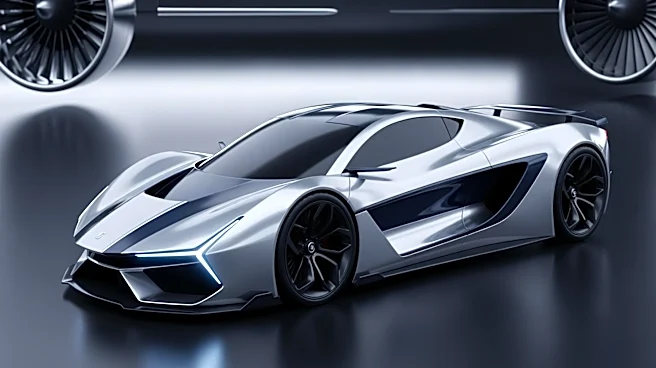
The Vector W8, an American supercar developed by Jerry Wiegert, emerged as a unique engineering feat in the late 20th century. Wiegert's vision, which began in the 1970s, was to create the fastest and most technologically advanced car, leading to the production
of the Vector W8 in 1990. The car was notable for its aerospace-inspired design, featuring aircraft-certified components and a body made from carbon fiber and Kevlar. Powered by a twin-turbo 6.0-liter V8 engine, the W8 boasted 625 horsepower and could reach speeds of up to 218 mph. Despite its engineering marvel, the car faced criticism, notably from tennis star André Agassi, who returned his W8 after experiencing issues. The Vector W8 remains a significant part of American automotive history as the only domestically built supercar of its time.
Why It's Important?
The Vector W8 represents a pivotal moment in American automotive history, showcasing the potential for domestic innovation in the supercar market. Its development highlighted the intersection of automotive and aerospace technologies, pushing the boundaries of car engineering. The W8's story underscores the challenges and triumphs of independent car manufacturing in the U.S., offering insights into the complexities of bringing a high-performance vehicle to market. The car's legacy continues to influence modern automotive design and engineering, serving as a testament to the ambition and creativity of American manufacturers.
What's Next?
While the Vector W8 itself is no longer in production, its influence persists in the automotive industry. Future developments may see a resurgence of interest in independent supercar manufacturing in the U.S., inspired by the W8's pioneering spirit. The lessons learned from the Vector W8's production and market reception could inform new approaches to car design and engineering, particularly in integrating advanced materials and technologies. As the automotive industry evolves, the legacy of the Vector W8 may inspire new generations of engineers and designers to pursue innovative projects.
Beyond the Headlines
The Vector W8's story also raises questions about the sustainability and viability of independent car manufacturing in a market dominated by large corporations. The challenges faced by Wiegert in bringing the W8 to market highlight the financial and logistical hurdles that small manufacturers must overcome. Additionally, the car's mixed reception points to the importance of balancing innovation with reliability and consumer expectations. The W8's legacy may prompt discussions about the role of independent manufacturers in driving technological advancements and diversifying the automotive landscape.