







What's Happening?
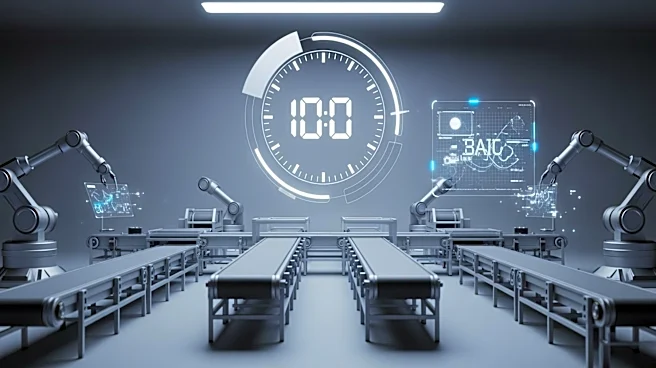
Manufacturers are increasingly exploring the use of artificial intelligence (AI) to improve scheduling processes, according to a report by Deloitte. The report highlights the challenges faced by manufacturers when schedules are disrupted by unforeseen
events such as equipment failures or supply chain delays. AI offers a solution by optimizing scheduling to enhance production efficiency. However, many manufacturers are not yet ready to implement AI at scale due to fragmented data systems and a lack of operational readiness. Effective AI scheduling requires a strong data foundation and a phased approach, starting with automating routine decisions and gradually incorporating more complex AI capabilities.
Why It's Important?
The integration of AI into manufacturing scheduling processes has the potential to significantly enhance productivity and reduce costs. By automating routine scheduling tasks, manufacturers can minimize downtime and improve resource allocation. This technological advancement is crucial for maintaining competitiveness in a global market where efficiency and adaptability are key. The report underscores the importance of data integration and operational readiness, suggesting that manufacturers who successfully implement AI scheduling could see substantial improvements in work-in-process inventory and equipment effectiveness. This shift could lead to broader industry changes, influencing supply chain management and production strategies.
What's Next?
For manufacturers, the next steps involve building a robust data infrastructure to support AI implementation. This includes integrating data from various systems and ensuring that AI solutions are aligned with business objectives. As manufacturers begin to adopt AI scheduling, they may also need to invest in training and development to equip their workforce with the skills needed to manage and optimize these new technologies. The successful deployment of AI in scheduling could serve as a model for other areas of manufacturing, potentially leading to further innovations in production processes and supply chain management.