





What's Happening?
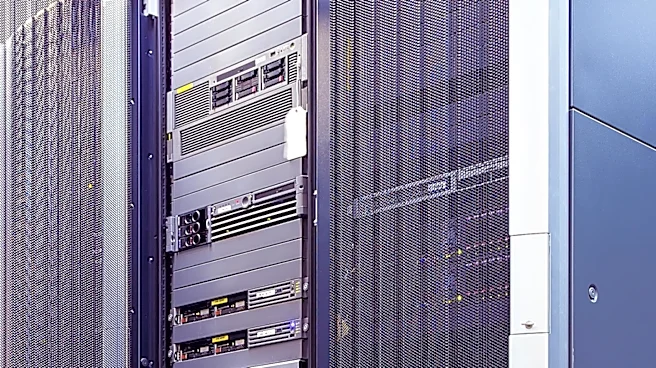
Tech companies like Google and Microsoft are increasingly seeking sustainable energy solutions to power their data centers, which are crucial for supporting the global expansion of artificial intelligence (AI). The reliance on diesel generators for backup
power has raised environmental concerns, particularly in Virginia, where over 10,500 diesel generators are in use. In response, these tech giants are collaborating with Israel's Phinergy, which offers an innovative Aluminum-Air technology as a zero-emission alternative. This technology generates electricity through a reaction between aluminum plates and oxygen, providing a reliable and environmentally friendly power source. Phinergy's system is designed to offer the same reliability as diesel generators but without the environmental impact. The company has already begun deploying its technology in commercial settings, including a strategic agreement with Swisscom Broadcast in Europe and a rollout in Israel to enhance traffic intersection power resilience.
Why It's Important?
The shift towards clean energy solutions in data centers is significant as it addresses both environmental and operational challenges. The tech industry's move away from diesel generators is driven by regulatory pressures and public health concerns, as well as the need for sustainable infrastructure to support AI workloads. Phinergy's Aluminum-Air technology not only reduces emissions but also offers a scalable solution that can be integrated into existing systems. This transition is crucial for maintaining the growth of AI technologies, which are heavily reliant on data center capabilities. The adoption of such clean energy solutions could set a precedent for other industries, promoting broader environmental sustainability and innovation in energy technologies.
What's Next?
Phinergy is poised to expand its presence in the U.S. market by partnering with Rosendin Electric, an American electrical contractor, to leverage existing industrial delivery platforms. This partnership aims to align Phinergy's systems with U.S. energy subsidies, potentially qualifying for federal tax credits. The company has also signed a non-binding Letter of Intent with a major global cloud provider for large-scale deployments through 2030. As the demand for clean energy solutions grows, Phinergy's technology could become a standard in data center operations, influencing future energy policies and infrastructure investments.