
What's Happening?
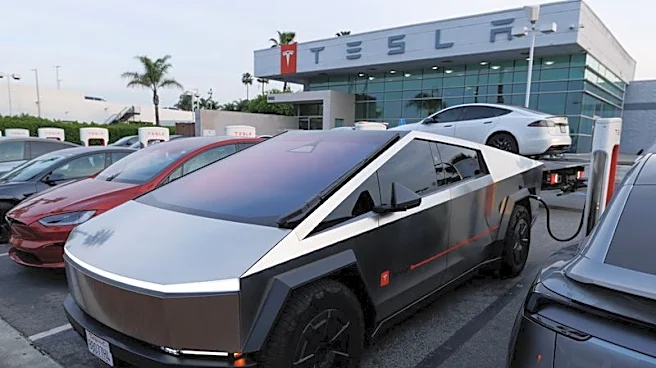
Tesla CEO Elon Musk has confirmed that millions of Tesla vehicles sold between 2019 and 2023 will need hardware upgrades to achieve Full Self-Driving (FSD) capabilities. The affected cars, equipped with
Tesla's Hardware 3 driver-assistance technology, were initially promised FSD compatibility via software updates. However, Musk stated that Hardware 3 lacks the necessary memory bandwidth compared to the newer Hardware 4, necessitating the replacement of computers and camera systems in these vehicles. Tesla plans to introduce 'microfactories' in major cities to facilitate these upgrades efficiently.
Why It's Important?
This development highlights the challenges Tesla faces in delivering on its FSD promises, impacting millions of vehicle owners who expected future software updates to enable autonomous driving. The need for hardware upgrades could affect customer satisfaction and Tesla's reputation, as well as pose logistical and financial challenges for the company. The introduction of microfactories represents a strategic move to streamline the upgrade process, potentially setting a precedent for how Tesla handles large-scale hardware updates in the future. The situation underscores the complexities of advancing autonomous vehicle technology and the importance of aligning hardware capabilities with software advancements.
What's Next?
Tesla is expected to outline a detailed plan for the hardware upgrades, including potential trade-in options for affected vehicle owners. The company's ability to execute these upgrades efficiently will be crucial in maintaining customer trust and advancing its autonomous driving goals. As Tesla navigates this challenge, industry observers will be watching for any impact on its market position and the broader implications for the autonomous vehicle sector.