


What's Happening?
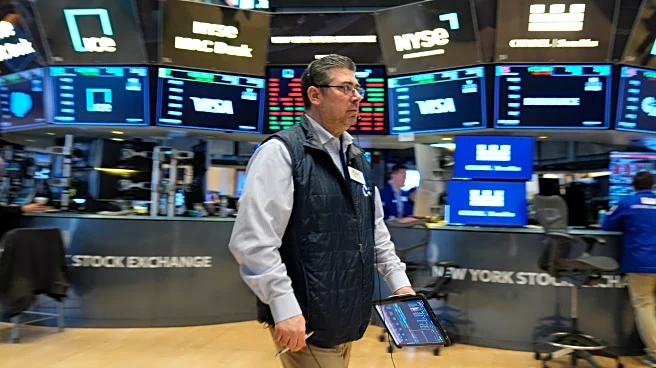
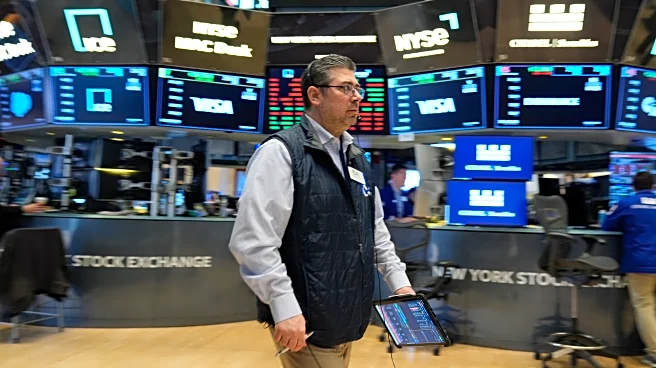
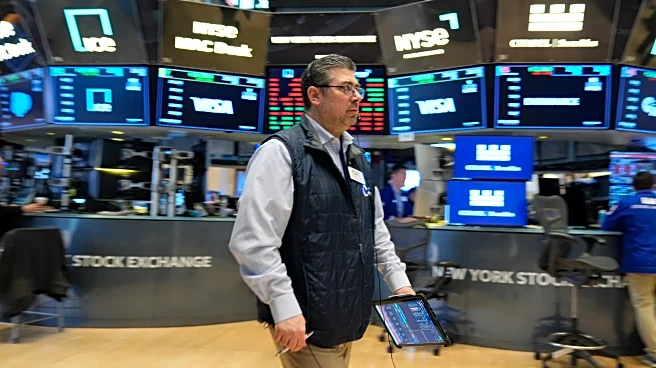
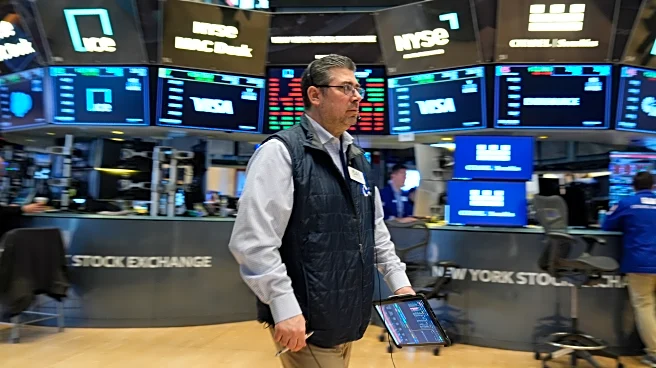
U.S. stock index futures declined on Thursday as investors remained cautious about developments in the Middle East and the potential for de-escalation in the Iran conflict. President Trump stated that Iran was eager to make a deal, contradicting Iranian
officials who denied any ongoing negotiations. This uncertainty has left markets on edge, with hopes for a breakthrough to restore shipping through the Strait of Hormuz remaining uncertain. The Dow E-minis, S&P 500 E-minis, and Nasdaq 100 E-minis all experienced declines, reflecting investor caution amid contradictory signals from both sides.
Why It's Important?
The ongoing tensions in the Middle East have significant implications for global markets and the U.S. economy. The closure of the Strait of Hormuz poses a risk to global oil supply, potentially leading to higher energy costs and inflation. This situation challenges central banks, including the Federal Reserve, as they navigate monetary policy amid geopolitical tensions. The uncertainty and volatility in markets reflect broader economic concerns and the potential for prolonged instability. Investors are advised to remain cautious and consider strategies to manage risks associated with geopolitical developments.
What's Next?
As the conflict continues, markets will remain sensitive to developments in the Middle East. Investors are likely to monitor geopolitical signals closely, with any indication of de-escalation potentially leading to rapid market adjustments. The potential for a resolution to the conflict and the reopening of the Strait of Hormuz will be key factors influencing market dynamics. Central banks may need to adjust their policies in response to these challenges, balancing inflation control with economic growth. Market participants are advised to stay informed and consider strategies to manage risks associated with ongoing geopolitical tensions.