

What's Happening?
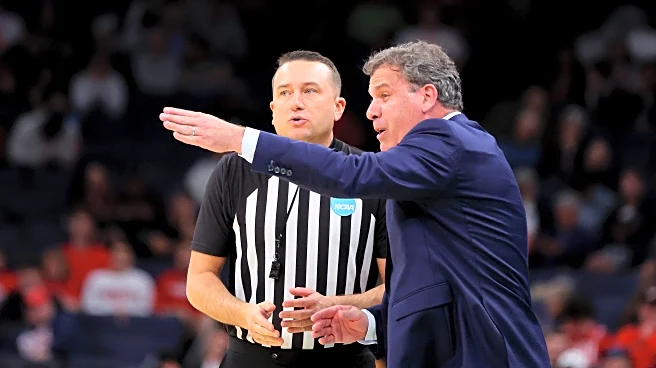
The NCAA men's basketball tournament has set a new record for viewership during its early rounds, with an average of 10.1 million viewers tuning in across CBS, TBS, TNT, and TruTV. This marks a 7% increase from the previous year, which was already the highest
in over three decades. The peak viewership occurred during a primetime window on Sunday, where 19.7 million viewers watched a series of exciting games, including Iowa's upset over defending champion Florida and a buzzer-beater by St. John's against Kansas. The second round averaged 11 million viewers, building on the 9.5 million from the first round. The First Four preliminary round also saw an increase, highlighted by Miami of Ohio's victory over SMU, which attracted 2.8 million viewers.
Why It's Important?
The surge in viewership for the NCAA men's tournament highlights the enduring popularity of college basketball in the United States. The increase in ratings suggests a growing interest in the sport, potentially driven by the excitement of close games and unexpected outcomes. This trend is significant for broadcasters and advertisers, as higher viewership translates to increased advertising revenue and greater exposure for sponsors. Additionally, the strong ratings may influence future broadcasting deals and the overall marketing strategy for college sports. The inclusion of Nielsen's big data component in ratings calculations may also be contributing to the higher numbers, indicating a shift in how live sports viewership is measured.
What's Next?
As the tournament progresses, broadcasters and advertisers will likely continue to capitalize on the high viewership numbers. The remaining rounds, including the Sweet 16 and beyond, are expected to draw even larger audiences, especially if more upsets and close games occur. Networks may adjust their programming and advertising strategies to maximize engagement and revenue. Additionally, the success of the men's tournament could have a positive impact on the women's tournament, which is also experiencing a rise in viewership. Stakeholders will be closely monitoring these trends to inform future decisions regarding college basketball broadcasting and marketing.