






What's Happening?
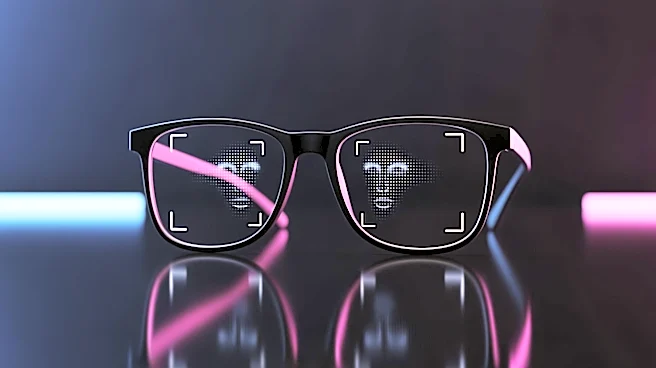
Meta has discreetly embedded face-recognition technology into an app associated with its smart glasses, according to an analysis by WIRED. This feature, known internally as 'NameTag,' is designed to identify individuals captured by the glasses' camera
and notify the wearer upon recognition. Although Meta publicly stated that it was still considering the use of face recognition, the code has been integrated into the app since January. The app, downloaded over 50 million times, is essential for the operation of Meta's smart glasses, including models from Ray-Ban and Oakley. The face-recognition feature, if activated, would create unique biometric signatures, or faceprints, from captured images and compare them against a database stored on the user's phone. This development comes after Meta previously settled lawsuits over its use of biometric data, including a $650 million settlement in Illinois and a $1.4 billion settlement in Texas.
Why It's Important?
The integration of face-recognition technology into consumer devices like Meta's smart glasses raises significant privacy concerns. Critics argue that such technology could be misused by various entities, including stalkers and law enforcement, potentially leading to privacy violations. The revival of this technology by Meta, despite previous controversies and legal settlements, highlights ongoing tensions between technological innovation and privacy rights. The deployment of face-recognition capabilities could transform users' devices into surveillance tools, sparking debates over the ethical implications and the need for regulatory oversight. This development underscores the broader societal challenge of balancing technological advancements with individual privacy protections.
What's Next?
While the face-recognition feature is not yet active, its presence in the app suggests that Meta may soon enable it, potentially sparking public and regulatory scrutiny. Privacy advocates and consumer rights groups are likely to monitor the situation closely, possibly leading to calls for stricter regulations on biometric data usage. Meta's actions could also influence other tech companies considering similar technologies, shaping industry standards and practices. The company's approach to addressing privacy concerns and engaging with stakeholders will be crucial in determining the future of face-recognition technology in consumer products.
Beyond the Headlines
The potential activation of face-recognition technology in Meta's smart glasses could have long-term implications for privacy norms and consumer trust in technology companies. As biometric data becomes more integrated into everyday devices, questions about data security, consent, and transparency will become increasingly important. The situation also highlights the need for comprehensive legal frameworks to govern the use of biometric technologies, ensuring that consumer rights are protected while allowing for innovation. The outcome of this development could set precedents for how similar technologies are deployed and regulated in the future.