









What's Happening?
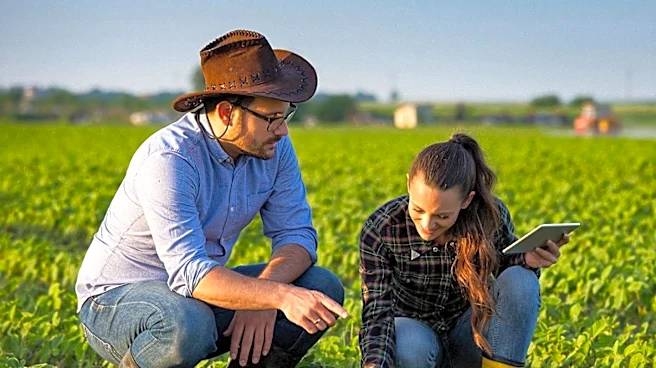
In Wisconsin, farmers are increasingly engaging in peer-to-peer learning networks to share knowledge and test new agricultural practices. These networks, supported by the University of Wisconsin–Madison Division of Extension, bring together farmers, researchers,
and conservation partners to address water quality challenges while promoting productive farming. The initiative is backed by the Wisconsin Department of Agriculture's Producer-Led Watershed Protection Grant Program, which funds on-farm demonstrations and research projects aimed at reducing nonpoint source pollution. By developing consistent, science-based protocols, these projects enable farmers to evaluate practices under real-world conditions, fostering innovation and collaboration across the state.
Why It's Important?
The farmer-to-farmer learning networks in Wisconsin play a crucial role in advancing sustainable agricultural practices. By facilitating the exchange of knowledge and experiences, these networks empower farmers to implement effective conservation strategies that improve water quality and soil health. The collaborative approach not only enhances the resilience and productivity of farms but also contributes to broader environmental goals. As agriculture faces increasing pressures from climate change and resource constraints, such initiatives are vital for promoting sustainable practices and ensuring the long-term viability of farming communities.