


What's Happening?
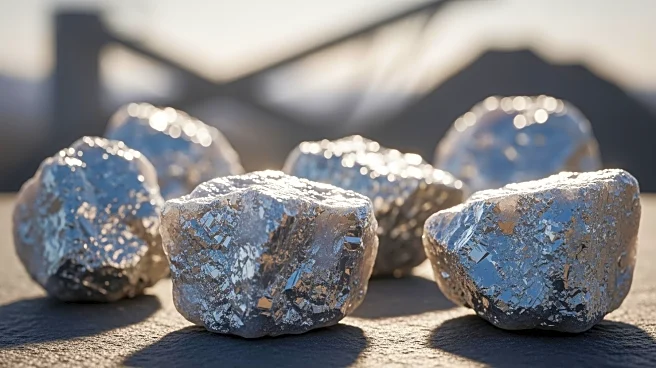
Ghana has officially entered the global lithium market following the ratification of the Ewoyaa Lithium Project mining lease by its Parliament on March 19, 2026. This decision ends nearly three years of regulatory uncertainty that had delayed investment
and raised concerns about Ghana's competitiveness in the battery minerals sector. The lease grants Atlantic Lithium, an Australia- and UK-listed mining company, exclusive rights to mine and process lithium in Ghana's Central Region for an initial 15-year period. The project is expected to attract significant international interest, particularly from Australian investors, due to its listing on the Australian Securities Exchange. The Ghanaian government will hold a 13% free-carried interest in the project, ensuring direct participation without upfront capital investment. The fiscal structure of the agreement is designed to balance state revenue with investor confidence, with royalties ranging from 5% to 12% depending on global lithium prices.
Why It's Important?
The entry of Ghana into the global lithium market is significant for the U.S. as it seeks to diversify its supply chains away from China, particularly in the battery minerals sector. Lithium is a critical component in batteries used for electric vehicles and renewable energy storage, making it essential for the global energy transition. Ghana's move reflects a broader shift across Africa, where countries are expanding lithium projects to capture greater value within global supply chains. The Ewoyaa mine is expected to produce about 3.6 million tonnes of spodumene concentrate over 12 years, making it one of Africa's largest lithium projects currently under development. This development is strategically important for the U.S., as it is the continent's only U.S.-bound lithium project, with many others backed by Chinese funding.
What's Next?
With the ratification of the mining lease, Atlantic Lithium can advance financing discussions and move closer to a final investment decision. The construction and development phases are expected to create jobs and stimulate local businesses in the Ewoyaa region. As the project progresses, it will likely attract further international investment, particularly from countries looking to secure lithium supplies for their energy transition needs. The Ghanaian government will continue to monitor the project's impact on local communities and the national economy, ensuring that the benefits of lithium mining are equitably distributed.