


What's Happening?
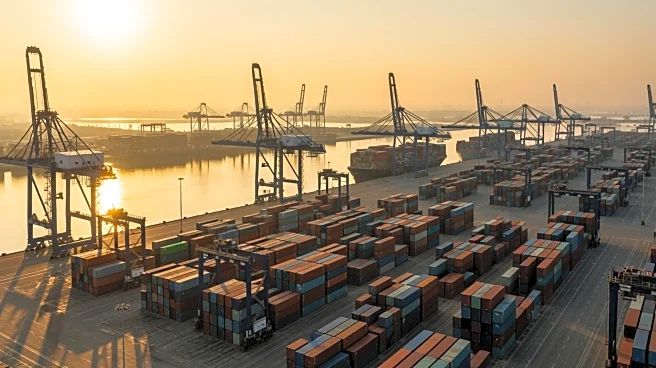
Port Everglades, located in South Florida, has reinforced its status as a key player in the U.S. maritime industry by achieving record volumes in cargo, energy, and cruise operations for Fiscal Year 2025. The port handled 1,167,552 TEUs, marking a significant
milestone in its role as a logistics hub connecting U.S. markets with international partners. Additionally, the port moved 131,855,261 barrels of petroleum products, maintaining its position as Florida's leading petroleum port. Cruise activity also saw a substantial increase, with 4,773,873 guests, making it the third-busiest cruise homeport globally. These achievements underscore the port's diversified business model and its strategic geographic location, which provides access to a large consumer market and efficient intermodal connectivity.
Why It's Important?
The developments at Port Everglades are crucial for U.S. trade and economic activity. By enhancing its capacity and connectivity, the port supports the efficient movement of goods, which is vital for supply chain stability and economic growth. The port's ability to handle increased volumes of cargo and energy products ensures that it remains a critical gateway for trade with the Caribbean and Latin America. This not only benefits local economies but also strengthens the U.S.'s position in global trade networks. The port's success in cruise operations further boosts tourism, contributing significantly to Florida's economy. Overall, the port's performance supports thousands of jobs and generates substantial economic activity, highlighting its importance as a national asset.
What's Next?
Port Everglades is set to continue its growth trajectory with a $3.8 billion capital investment plan aimed at expanding capacity and improving productivity. Key projects include the completion of the Southport Turning Notch Extension and the installation of Super Post-Panamax gantry cranes, which will enhance the port's ability to service larger vessels. Future plans involve deepening and widening the harbor channel in collaboration with the U.S. Army Corps of Engineers, expected to be completed by 2034. These initiatives are designed to ensure the port remains competitive and capable of meeting the demands of modern global trade.