






What's Happening?
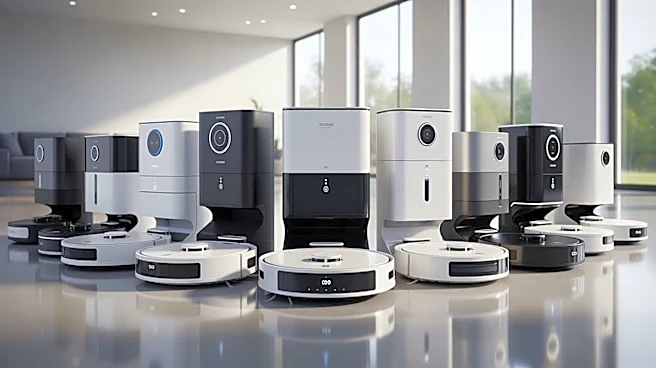
iRobot, the company known for pioneering robot vacuum cleaners, has announced the release of eight new Roomba models following its recent bankruptcy and acquisition by its primary manufacturer in China, Shenzhen PICEA Robotics. The new lineup features
significant improvements, including increased suction power, reduced size for better home navigation, and the introduction of 'hot spot mopping.' The flagship model, Max 775, boasts a suction power of 30,000 Pa, nearly double that of its predecessor, and includes advanced features like pressurized hot spray pretreatment. The new models are designed to be up to 25% smaller, making them more maneuverable in tight spaces. Pricing for the new models starts at approximately $309 for the base model and goes up to $1,080 for the flagship model, offering a more affordable range compared to previous offerings.
Why It's Important?
The introduction of these new Roomba models marks a significant step for iRobot as it attempts to regain its footing in the competitive robot vacuum market. By enhancing product features and reducing prices, iRobot aims to attract a broader customer base and compete more effectively against other brands offering similar products at lower prices. This move could potentially revitalize the company's market position and financial health, providing consumers with more options in the home cleaning technology sector. The advancements in technology, such as improved navigation and cleaning capabilities, reflect ongoing innovation in the industry, which could lead to increased consumer adoption of robotic cleaning solutions.
What's Next?
As iRobot re-establishes itself under new ownership, the company will likely focus on marketing these new models to regain consumer trust and market share. The success of these products could influence future developments and innovations in the robotic vacuum industry. Additionally, consumer response to the new features and pricing will be critical in determining iRobot's competitive position moving forward. The company may also explore further enhancements and expansions of its product line to maintain momentum and address evolving consumer needs.