





What's Happening?
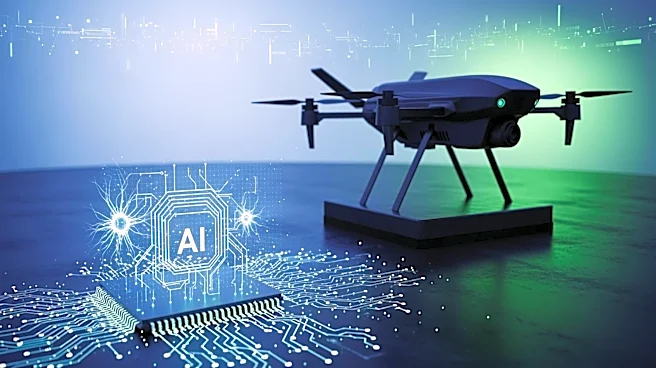
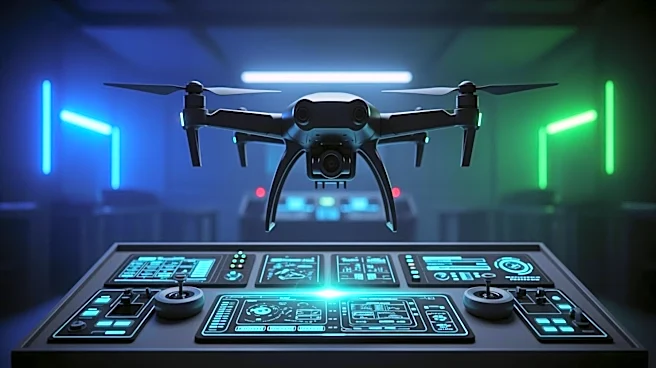
Shield AI, an autonomy start-up, has been selected to integrate its Hivemind system into the Pentagon's Low-Cost One-Way Attack System (LUCAS) drones. These drones, reverse-engineered from the Iranian-made HESA Shahed-136, are designed for precision strikes
at a lower cost compared to conventional long-range cruise missiles. The integration of Hivemind will allow these drones to execute more complex behaviors, improve resilience to jamming, and increase mission success rates. The Pentagon plans to demonstrate this technology later in 2026, with a swarm of 10 or more munitions. This development is part of a broader effort to enhance the capabilities of uncrewed aerial systems in military operations.
Why It's Important?
The integration of AI into military drones represents a significant advancement in defense technology, potentially transforming how military operations are conducted. By enabling drones to adapt to battlefield changes and coordinate actions, the Pentagon can achieve higher success rates at a reduced cost. This could lead to a shift in military strategy, emphasizing the use of autonomous systems for precision strikes. The cost-effectiveness of these AI-equipped drones could also influence defense budgets and procurement strategies, as they offer a cheaper alternative to traditional munitions. Additionally, the success of this technology could spur further innovation and investment in AI-driven military applications.
What's Next?
A demonstration involving LUCAS drones equipped with Hivemind is scheduled for the second half of 2026. This test will assess the drones' ability to perform in complex environments and adapt to challenges such as GPS and communication jamming. The outcome of this demonstration could determine the future integration of AI in military operations and influence the Pentagon's decision on expanding the use of such technology. Stakeholders, including defense contractors and military strategists, will be closely monitoring the results to evaluate the potential for broader deployment.