
What's Happening?
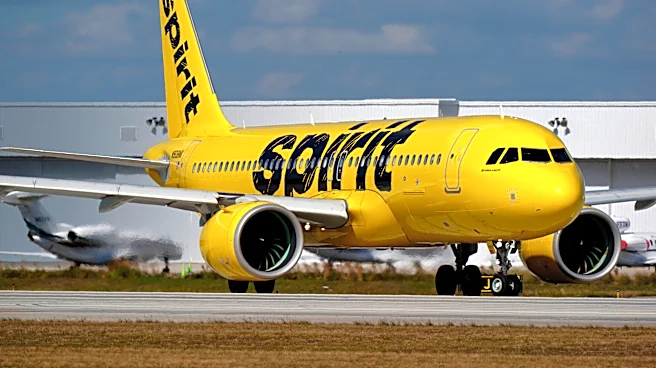
Spirit Airlines has announced that it will cease operations after failing to secure a federal bailout. The airline, known for its low-cost flights, has been struggling financially and was seeking government
assistance to continue its operations. The decision to halt operations comes as a significant blow to the airline industry, which has been facing challenges due to fluctuating travel demands and economic pressures. The announcement was made amidst broader discussions about the financial health of airlines and the need for federal support to sustain operations during challenging economic times.
Why It's Important?
The cessation of operations by Spirit Airlines highlights the ongoing financial struggles within the airline industry, particularly for low-cost carriers. This development could lead to reduced competition in the market, potentially resulting in higher airfares for consumers. Additionally, the closure of Spirit Airlines will likely result in job losses for its employees and impact related industries such as tourism and hospitality. The situation underscores the importance of federal support for the airline industry, which plays a crucial role in the U.S. economy by facilitating travel and commerce.
What's Next?
With Spirit Airlines ceasing operations, other airlines may seek to fill the gap left in the market, potentially leading to shifts in market dynamics. The federal government may face increased pressure to provide support to other struggling airlines to prevent further closures. Additionally, affected employees and stakeholders will need to navigate the transition and seek alternative employment opportunities. The broader airline industry will continue to monitor the situation closely, as the financial health of airlines remains a critical concern.