
What's Happening?
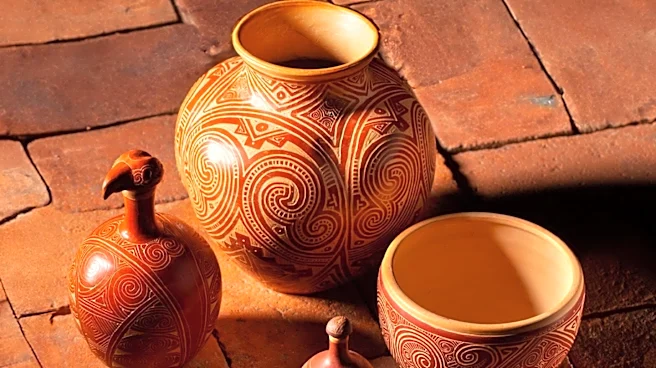
Nampeyo, a renowned Hopi potter from the late 1800s, played a pivotal role in the Sikyátki Revival, a movement that revitalized ancient Hopi pottery techniques and designs. Her work transformed Pueblo
pottery into a globally recognized modern art form, blending traditional motifs with personal innovations. Nampeyo's pieces are highly valued among collectors, with one of her jars selling for $350,000 in 2010. Despite her significant contributions, Nampeyo's name remains relatively unknown outside specialist circles. Recent exhibitions, such as 'Hearts of Our People: Native Women Artists' and 'Nampeyo and the Sikyátki Revival,' have brought her work to broader audiences, highlighting her influence on contemporary potters.
Why It's Important?
Nampeyo's work is crucial in preserving and promoting Hopi cultural heritage, offering economic opportunities for Native American artists. Her revival of traditional pottery techniques has inspired generations of potters, fostering a deeper appreciation for Indigenous art. The increased visibility of her work in exhibitions and museums helps challenge stereotypes and elevate Native American art to the status of fine art. This recognition not only honors Nampeyo's legacy but also supports cultural preservation and economic empowerment for Indigenous communities.
Beyond the Headlines
Nampeyo's legacy extends beyond her artistic achievements, reflecting broader themes of cultural resilience and adaptation. Her work exemplifies the dynamic nature of tradition, where ancestral knowledge is reimagined to fit contemporary contexts. The commercialization of her pottery during the rise of the railway and tourism industries highlights the complex interplay between Indigenous art and market forces. Nampeyo's story underscores the importance of recognizing and valuing Indigenous contributions to art and culture, challenging historical narratives that have marginalized these voices.