






What's Happening?
Chevron has announced an expected increase in its upstream earnings by $1.6 billion to $2.2 billion for the first quarter of 2026, compared to the previous quarter. This surge is attributed to the rising oil and gas prices caused by the ongoing conflict
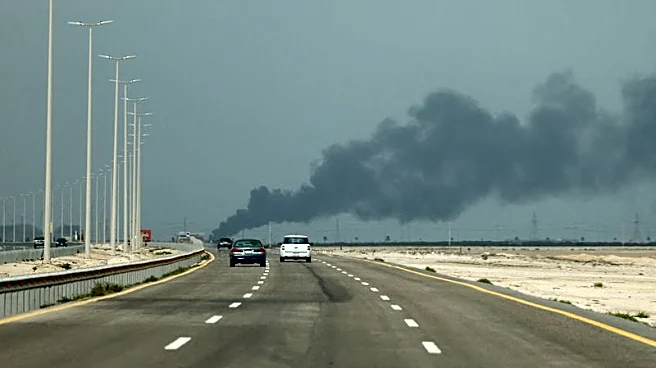
in Iran, which began on February 28, 2026. The conflict has led to a significant disruption in the Middle East, including the closure of the Strait of Hormuz, a critical passage for global energy flows. As a result, oil prices have increased by as much as 65%, with benchmark Brent crude prices averaging $78.38 per barrel in the first quarter, a 24% rise from the previous quarter. Chevron's production is expected to average between 3.8 million and 3.9 million barrels per day, although it has faced some production challenges due to downtime at Kazakhstan's Tengizchevroil project and reduced output in parts of the Middle East.
Why It's Important?
The increase in Chevron's earnings highlights the broader impact of geopolitical tensions on global energy markets. The closure of the Strait of Hormuz, a vital channel for oil transportation, has caused significant volatility in oil prices, affecting both producers and consumers worldwide. For Chevron, the rise in oil prices presents an opportunity to boost its financial performance, despite operational challenges in certain regions. However, the situation underscores the vulnerability of global energy supply chains to geopolitical disruptions, which can lead to increased costs for consumers and potential economic instability. The developments in the Middle East could also influence energy policies and strategic decisions by other major oil companies and governments.
What's Next?
As the conflict in Iran continues, Chevron and other energy companies will likely monitor the situation closely to assess its impact on production and pricing strategies. The ongoing volatility in oil prices may prompt companies to adjust their investment plans and explore alternative supply routes to mitigate risks. Additionally, governments and international organizations may seek diplomatic solutions to stabilize the region and ensure the security of global energy supplies. The situation could also lead to increased discussions on energy independence and the diversification of energy sources to reduce reliance on geopolitically sensitive regions.