

What's Happening?
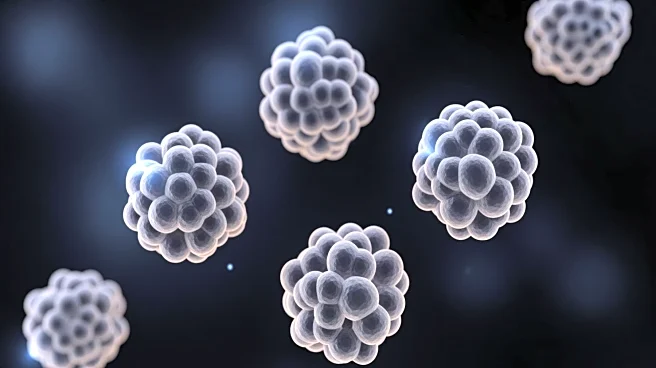
Researchers at the University of Copenhagen have discovered that lipid nanoparticles (LNPs) with a disorganized internal structure may improve the delivery of therapeutic cargo inside cells. This finding, presented at the Biophysical Society Annual Meeting, challenges the traditional focus on creating highly organized LNPs. The study revealed that disorganized LNPs, which allow for some separation between charged components, are more effective at releasing their cargo once inside cells. This discovery could have significant implications for the development of treatments for cancer, genetic diseases, and other conditions, as LNPs are crucial for the delivery of mRNA vaccines and other therapies.
Why It's Important?
The research suggests a paradigm shift in the design
of LNPs, which are vital for the delivery of various medical treatments. By focusing on disorganized structures, developers may enhance the efficiency of drug delivery, potentially improving treatment outcomes for rapidly dividing cells, such as in cancer therapy. This could lead to more effective and targeted therapies, reducing the amount of medication needed and minimizing side effects. The findings may influence future research and development strategies in the pharmaceutical industry, encouraging a reevaluation of current nanoparticle design principles.
What's Next?
The study's results may prompt further research into optimizing the internal structure of LNPs for various therapeutic applications. Pharmaceutical companies might explore new manufacturing techniques to produce LNPs with the desired disorganized structure. Additionally, regulatory bodies could consider these findings when evaluating the safety and efficacy of new nanoparticle-based treatments. As the field adapts to these insights, collaborations between researchers and industry stakeholders will be crucial to translating these findings into clinical practice.