





What's Happening?
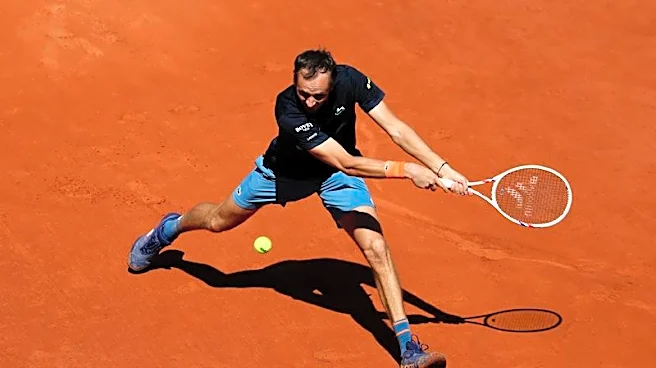
The French Open is underway, and with it comes the spotlight on the mental challenges faced by tennis players, exemplified by Andrey Rublev's on-court behavior. Known for his intense emotional displays, Rublev often resorts to physically expressing his frustration,
sometimes injuring himself in the process. This behavior is not unique to Rublev, as the sport has a history of players like John McEnroe and Daniil Medvedev exhibiting similar outbursts. Rublev's coach, Marat Safin, who himself broke over a thousand rackets during his career, acknowledges the emotional toll the sport can take. Rublev admits that his emotions often take control, a sentiment echoed by other players who struggle with the solitary nature of tennis and the pressure of performing under the watchful eyes of spectators.
Why It's Important?
The mental aspect of tennis is a critical component of the sport, affecting players' performances and careers. Emotional outbursts can lead to penalties and impact a player's reputation and mental health. Understanding and managing these emotions is crucial for athletes to maintain their competitive edge and personal well-being. The issue also highlights the need for mental health support within sports, as players like Rublev and Medvedev navigate the pressures of high-stakes competitions. This focus on mental health is increasingly relevant in sports discourse, as it affects not only performance but also the longevity of athletes' careers.